When you look at a finished deck, it might seem like one solid structure — but underneath every board is a carefully built deck substructure made up of posts, beams, joists, and other essential components. Each plays an important role in keeping your deck safe, level, and long-lasting in Hawaii’s unique climate.
If you’re planning a deck rebuild or renovation on Oahu, understanding these key terms will help you communicate clearly with your contractor and make confident decisions about materials and maintenance.
Table of Contents
Add a header to begin generating the table of contents
1. Footings
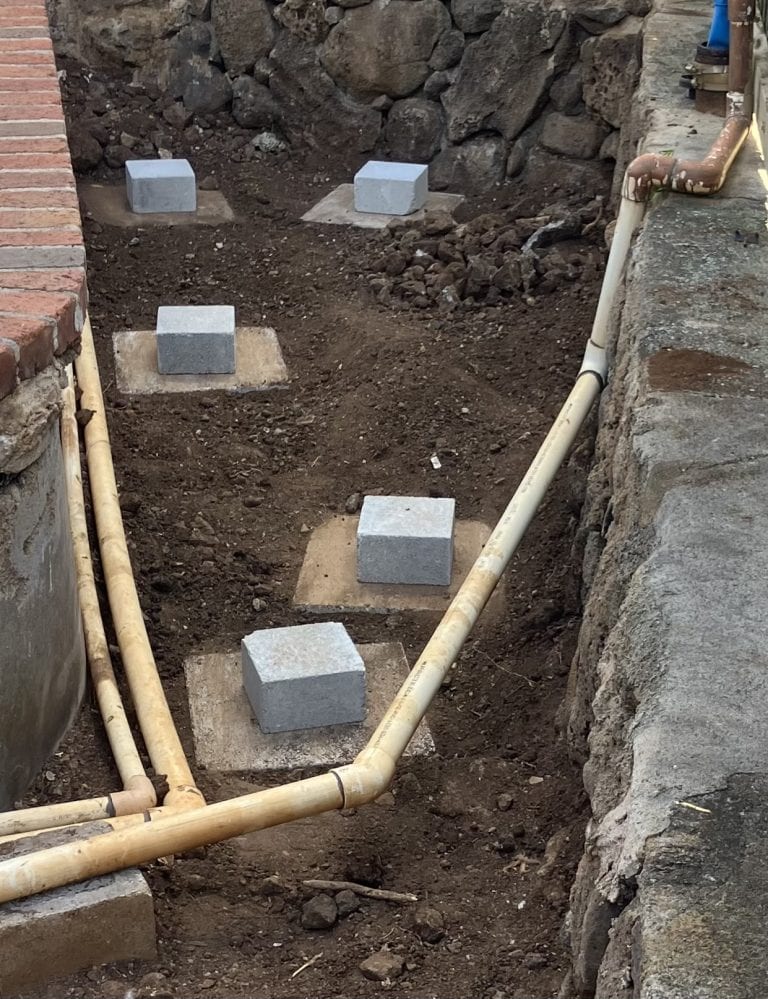
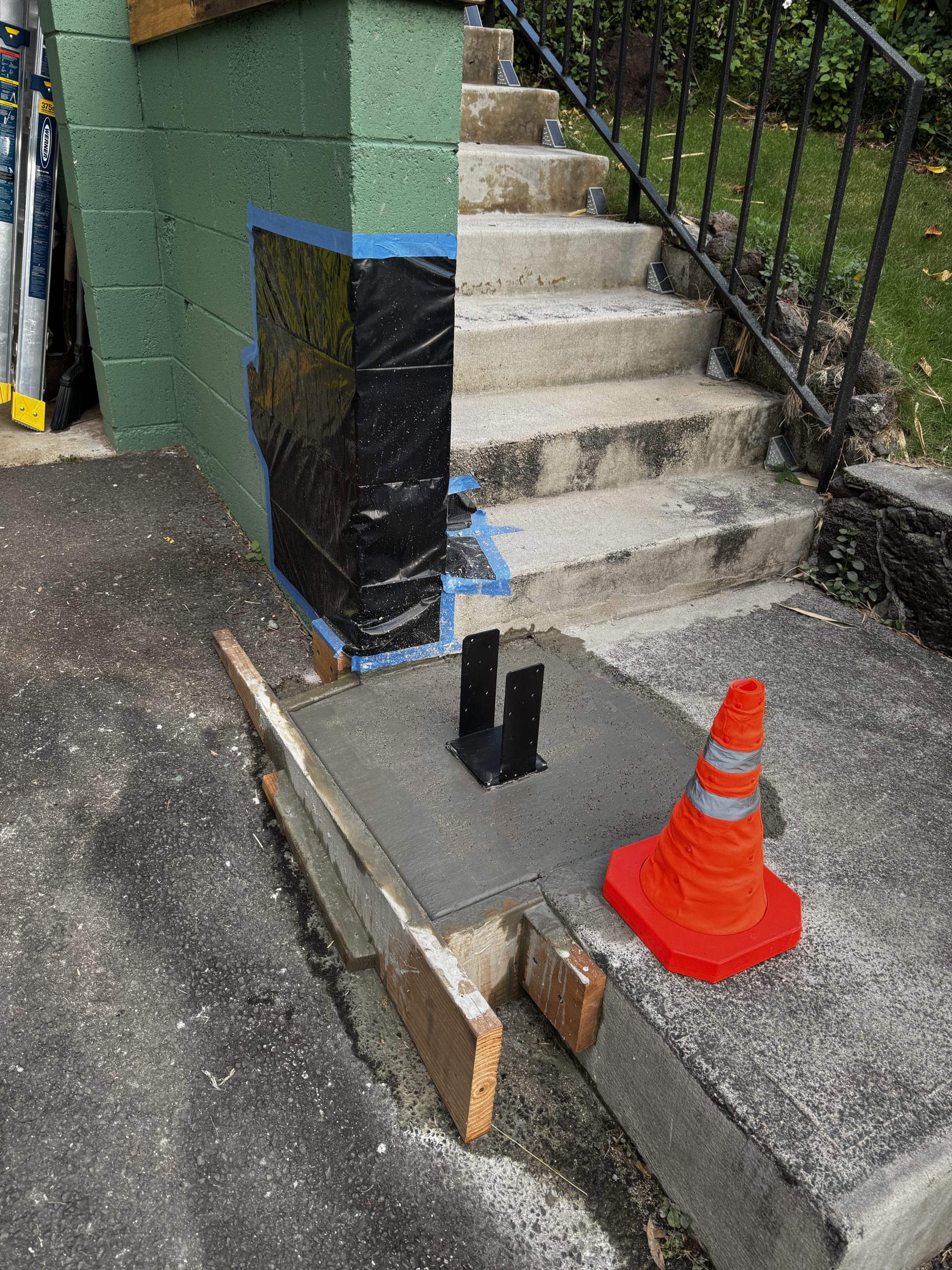
Footings are the concrete bases that anchor your deck to the ground and distribute its load into the soil. Hawaii commonly uses a post-and-pier footing system, a style rooted in historic plantation-era construction where homes were elevated to handle moisture, ventilation, and uneven topography. Unlike many mainland homes that rely on continuous foundation walls, Oahu decks and older homes often sit on spaced piers or pads. This system works well with our terrain but requires careful attention to footing depth, reinforcement, and placement due to Hawaii’s high rainfall, expansive soils, and softer coastal conditions.
Example of Deck Footings for Substructure - Honolulu, HI
Example of Concrete Footing - Honolulu, HI
2. Posts
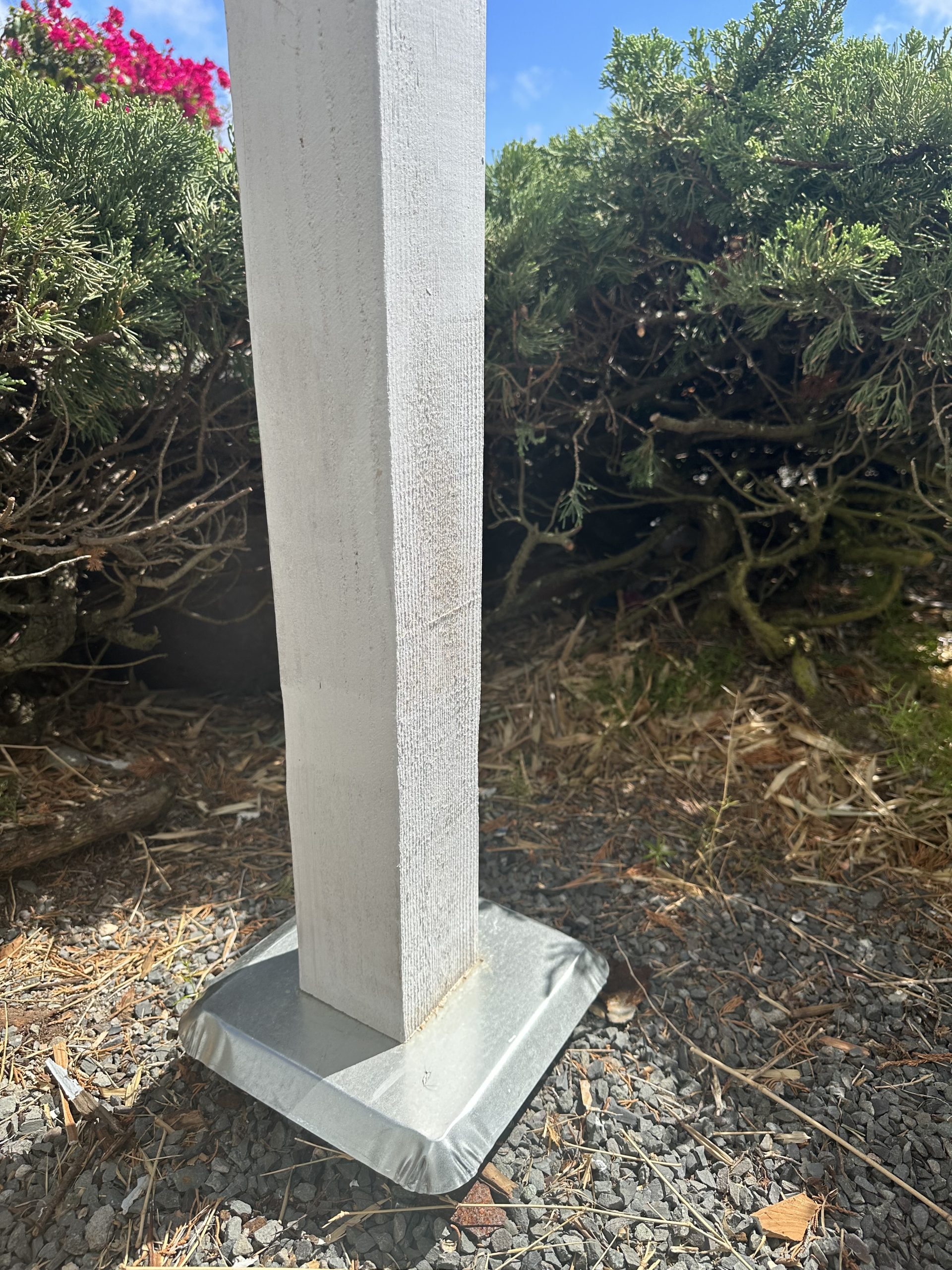
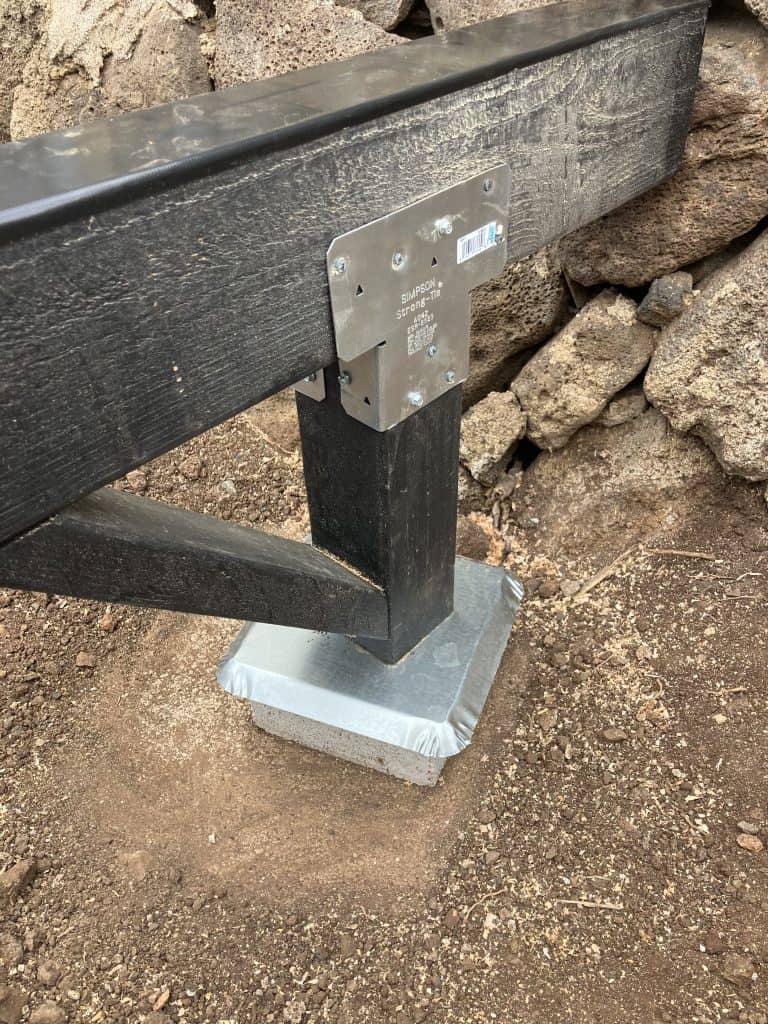
Posts are the vertical supports that sit on top of the footings and hold up the beams. They carry the load of the entire deck. Most posts are made from pressure-treated lumber and should be protected from moisture by painting or sealing regularly. Because many areas of Oahu experience constant moisture or salt air, the base of the posts is one of the first places homeowners may see deterioration.
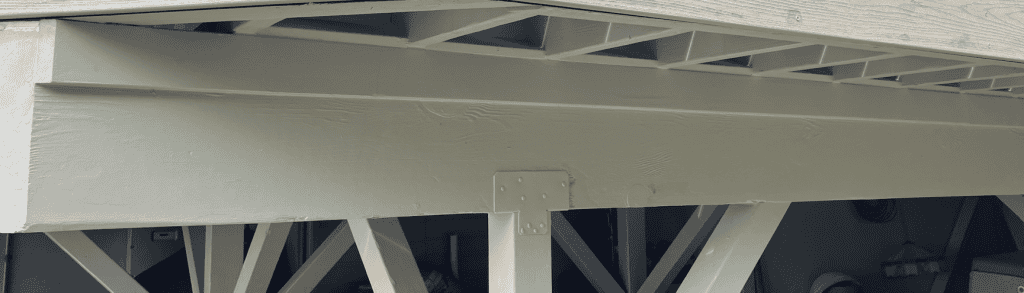
Example of Deck Post with Termite Pan - Honolulu, HI
Example of Footing, Termite Pan, Post and Beam for Ground Level Deck - Honolulu, HI
3. Beams
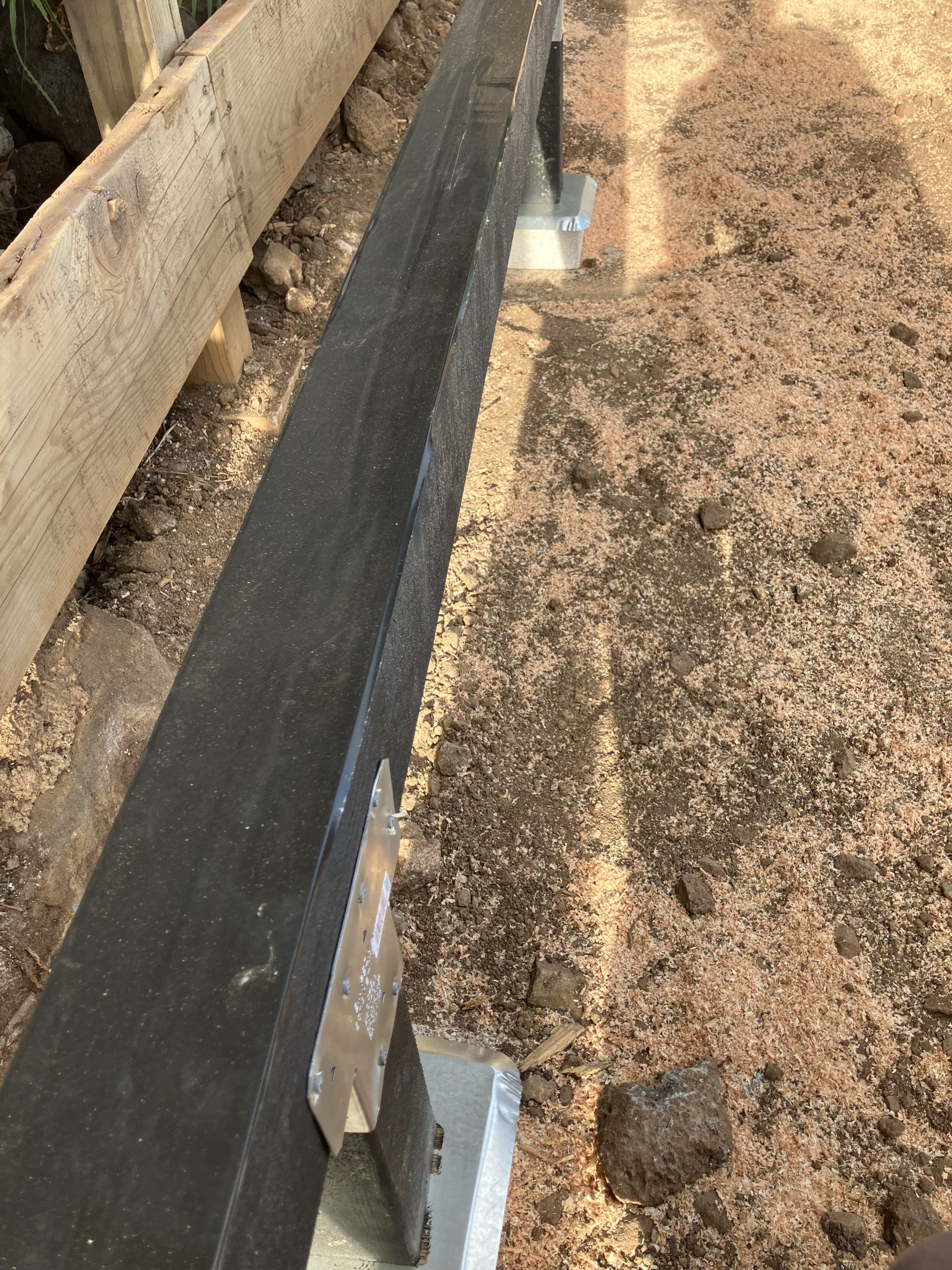
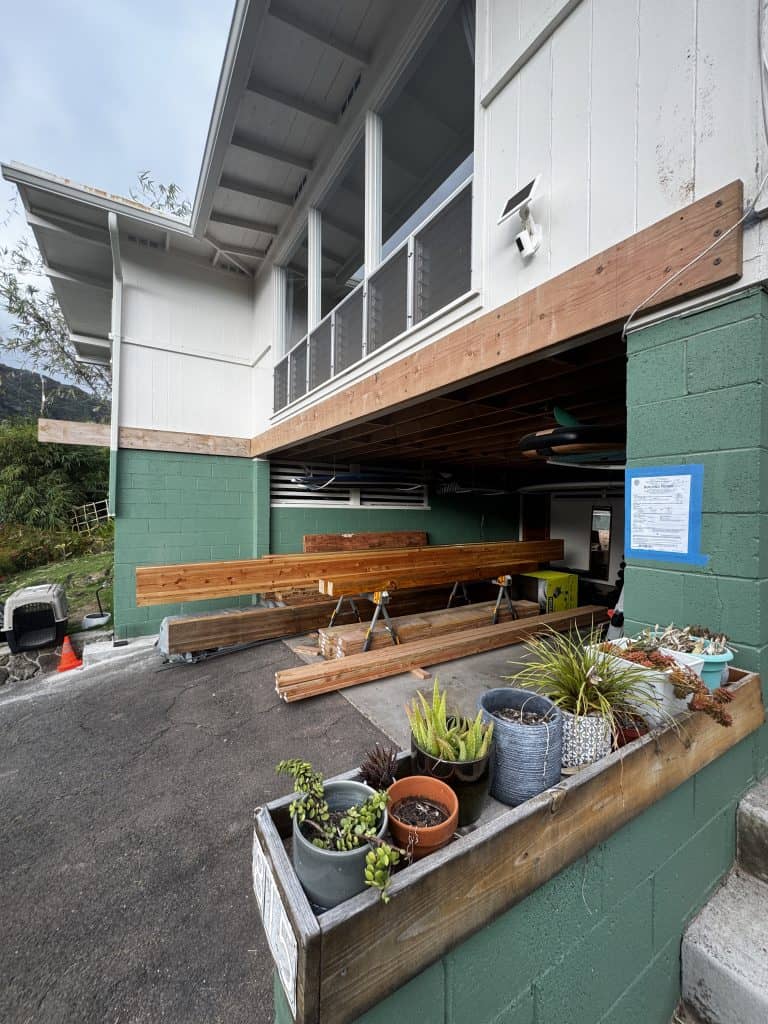
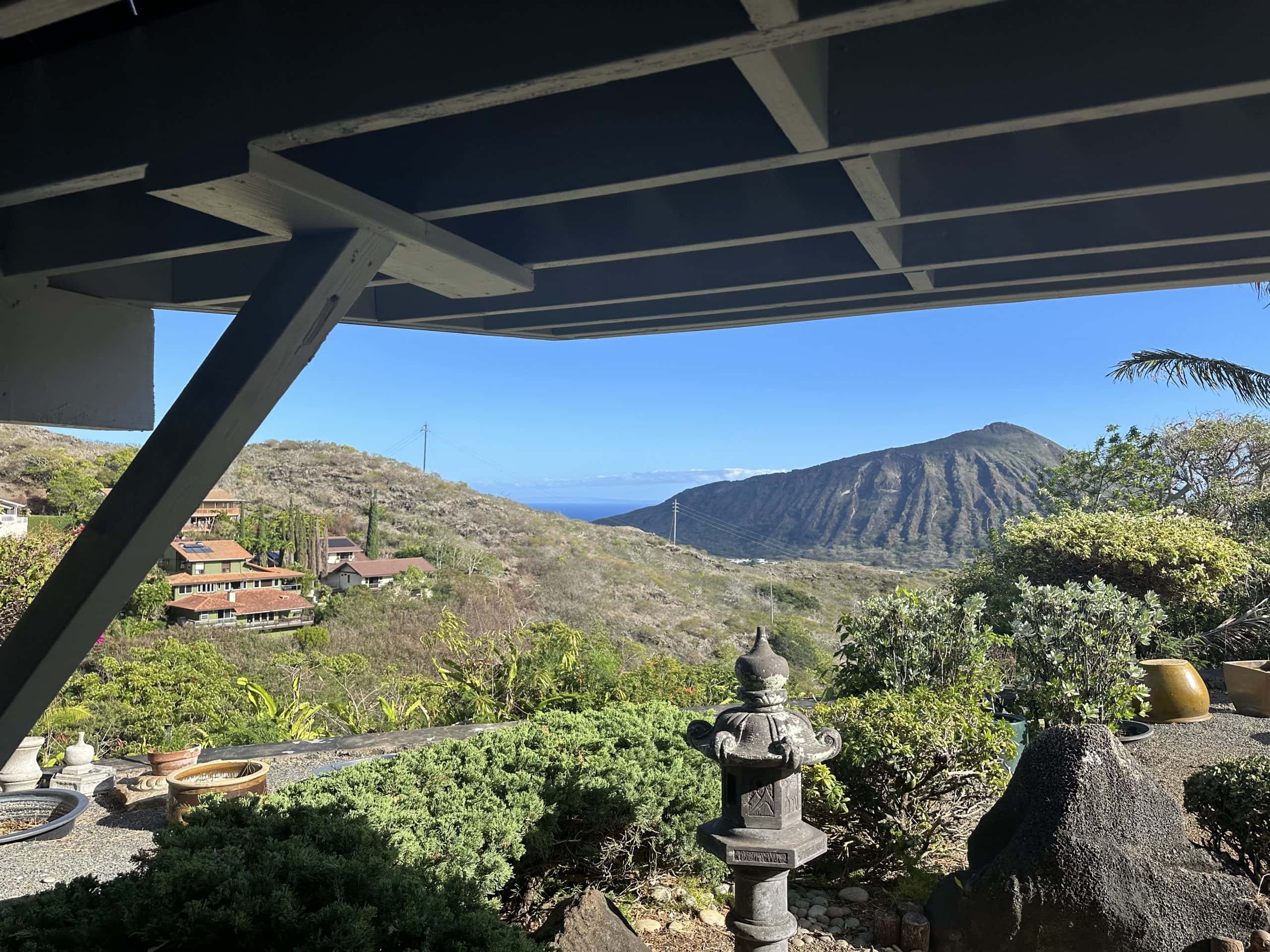
Beams run horizontally between the posts and carry most of the deck’s structural load. They support the joists above them and help ensure the deck stays level and strong — especially important in Oahu’s climate, where wind and moisture demand a well-built frame.
Example of a Deck Beam During a Deck Rebuild - Honolulu, HI
Example of a Ground Level Deck Beam During a Deck Rebuild - Honolulu, HI
4. Joists
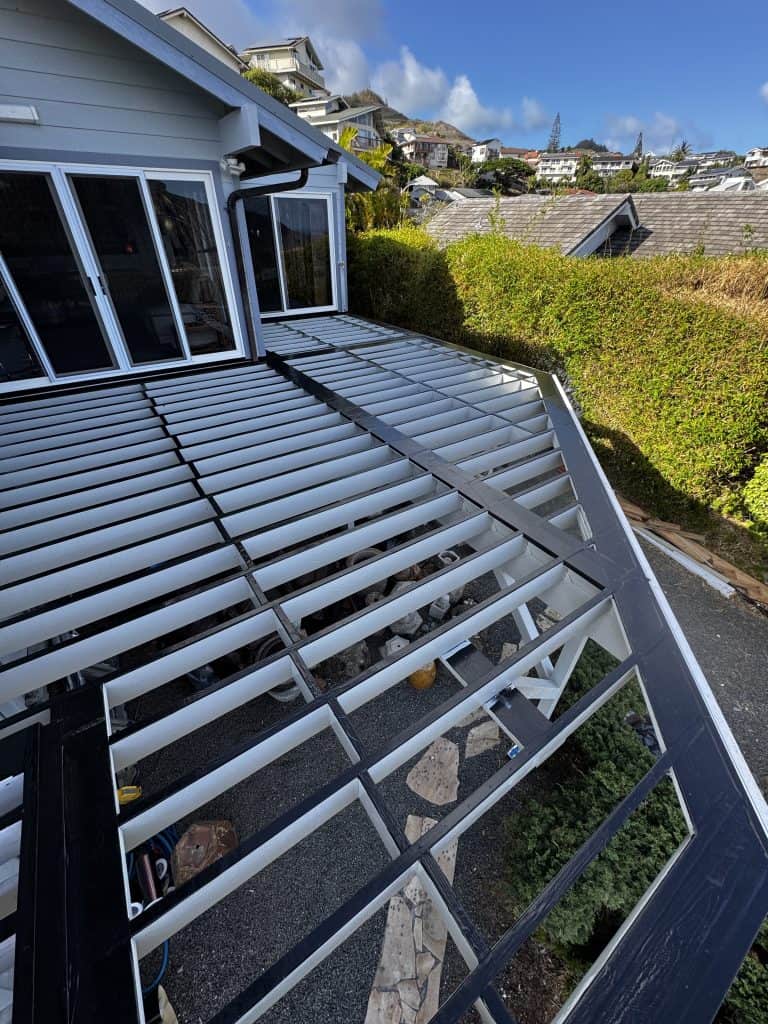
Joists are the framing members that run perpendicular to the beams. They support the deck boards and determine how solid your deck feels underfoot. Joist spacing depends on your chosen decking material — for example, composite decking like Trex or TimberTech often requires tighter spacing than natural wood.
We always install joist tape on top of the framing because it protects your deck’s structure from moisture and extends its lifespan. In Hawaiʻi’s climate—where rain, humidity, and sun exposure are constant—joists tend to absorb water where the deck boards are fastened, leading to premature rot, splitting, and corrosion around screws. Joist tape creates a waterproof barrier that helps prevent this damage, keeps hardware more secure over time, and ultimately adds years of durability to your substructure. It’s a small upgrade that delivers long-term protection and value for your deck.
Example of Deck Joists with Deck Tape Applied - Honolulu, HI
5. Ledger Board
The ledger board is attached directly to your home’s framing and helps anchor one side of the deck. It’s one of the most critical components of a safe, long-lasting deck. Proper flashing behind the ledger prevents water from seeping into your home — a common issue in Hawaii’s humid climate if not done correctly.
Example of Deck Ledger for New Deck Build - Honolulu, HI
6. Deck Boards
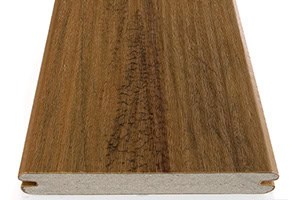
Deck boards form the visible walking surface of your deck. Today’s Oahu homeowners can choose from many materials — natural wood, composite, or PVC — each with different durability and maintenance needs. Products like Trex or TimberTech are popular across Oahu for their fade resistance and coastal durability. Ipe is also a common used decking material for homeowners that prefer natural woods. Learn more about Selecting Deck Boards for Hawaii Homeowners.
Example of a TimberTech Deck Board
7. Railings
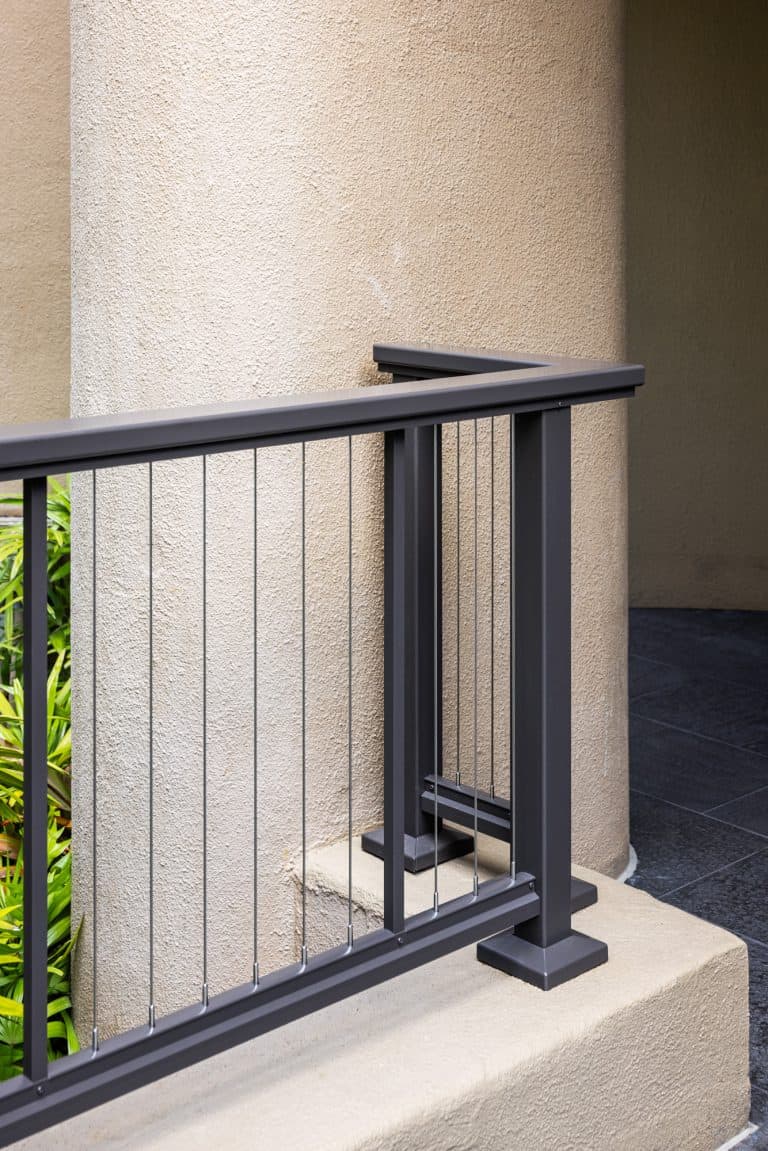
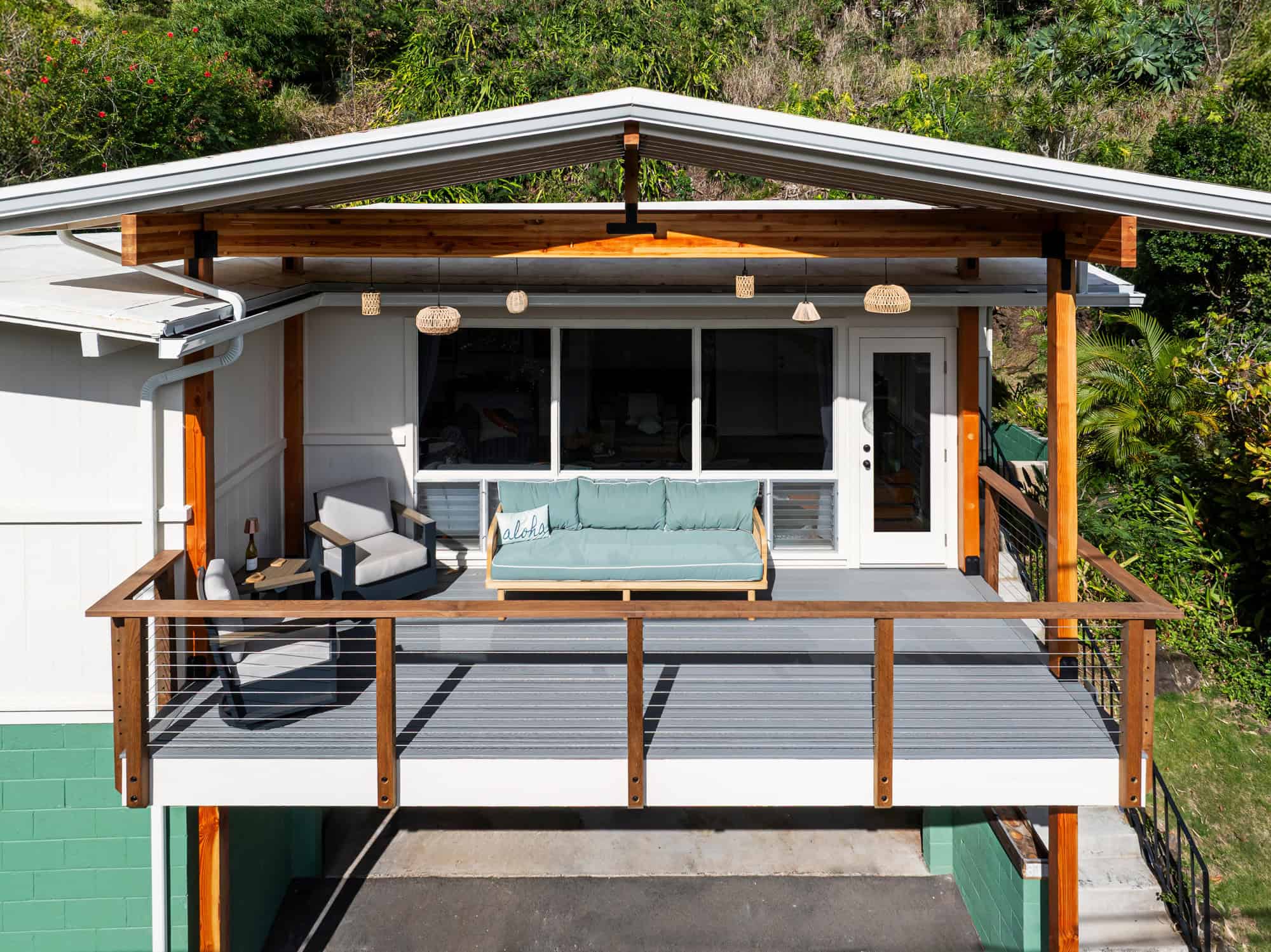
Railings provide both safety and style. They typically include posts, top and bottom rails, and balusters or cable systems. Modern options like aluminum railings or Feeney stainless-steel cable systems are perfect for ocean-front homes such as those in Kailua, Honolulu and Hawaii Kai.
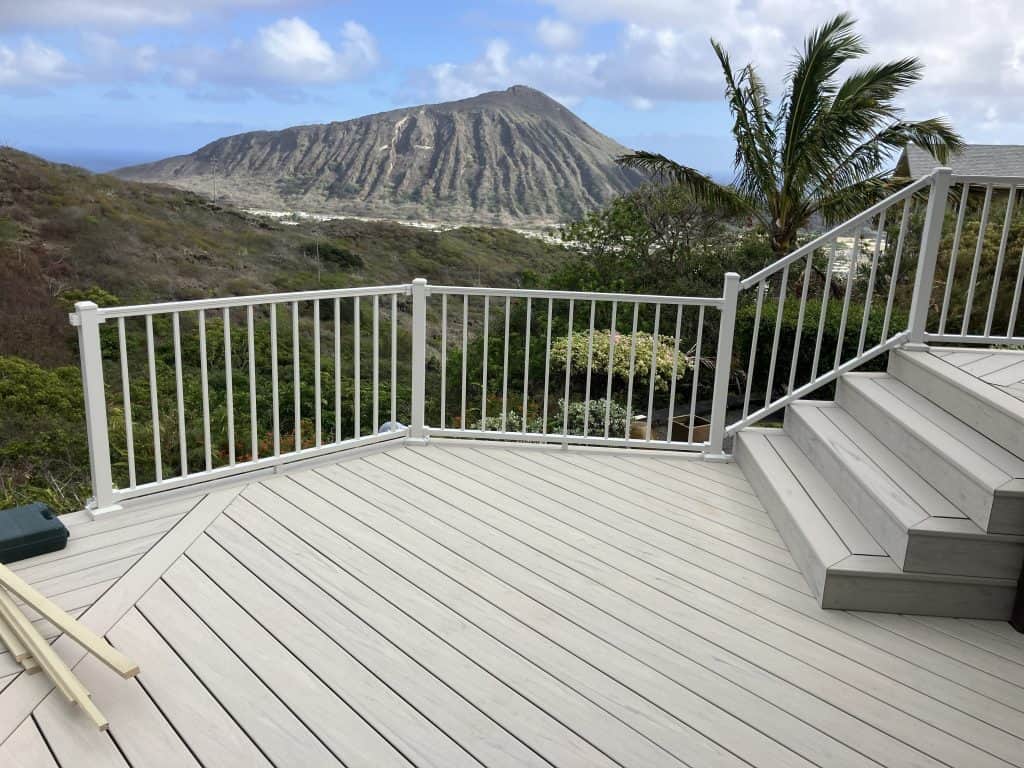
Aluminum railing is also a great choice for homeowners exposed to strong coastal winds and salt air — common in ridge neighborhoods like Waialae Iki, Mariner’s Ridge, and Aina Haina, as well as rainy Windward areas such as Kaneohe and Kahaluu.
Example of Railing - Honolulu, HI (Photo Credit: Adam Taylor)
Example of Deck Boards and Railing - Honolulu, HI
8. Fascia and Trim
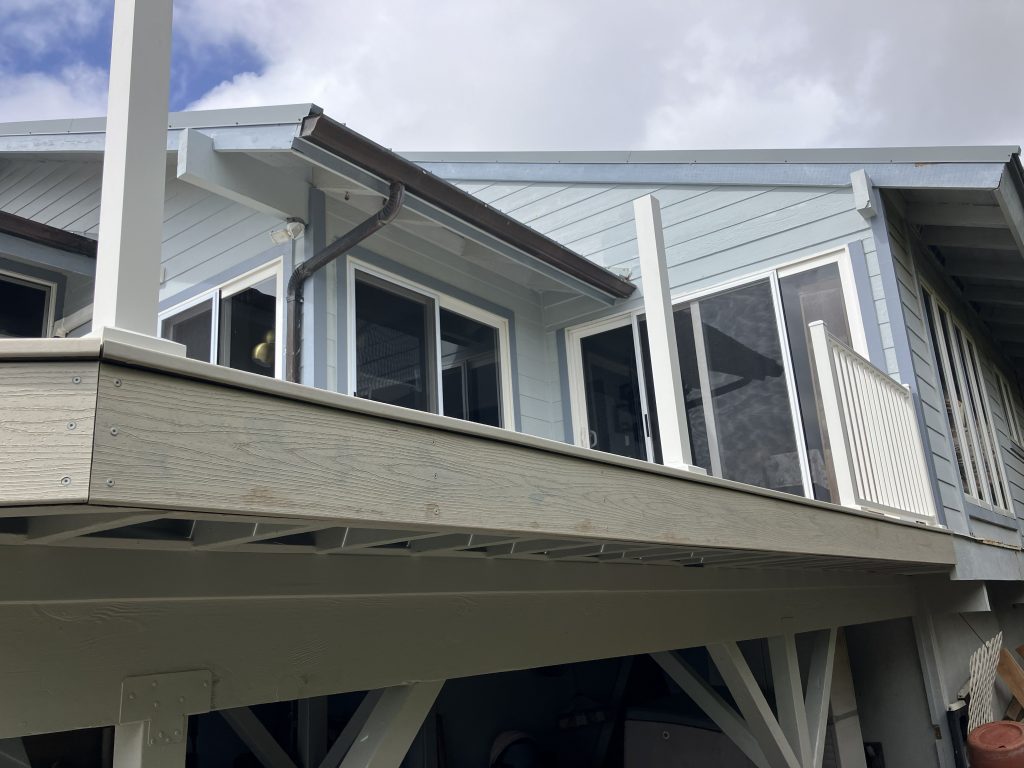
Fascia boards cover the outer edges of your framing for a clean, finished look. They also help protect the structure from UV exposure and rain – especially important for homeowners in Honolulu and Hawaii Kai where the sun is more prominent all day. Many homeowners choose matching composite fascia to coordinate with their deck boards.
Example of Composite Fascia During Installation - Honolulu, HI
9. Stairs
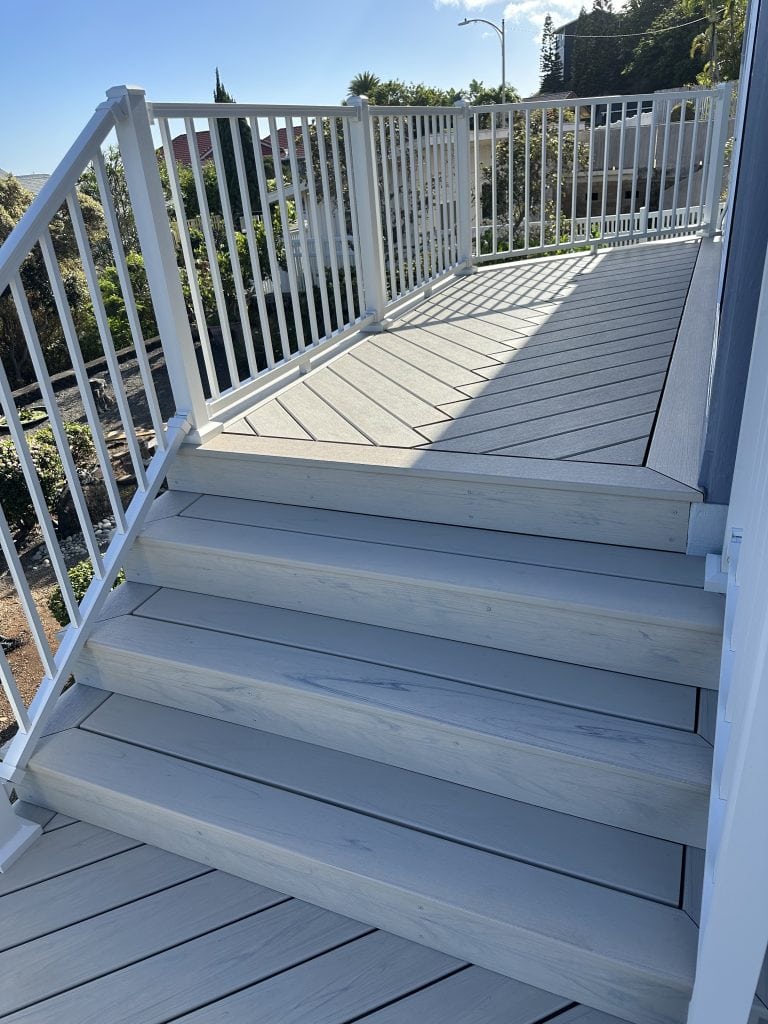
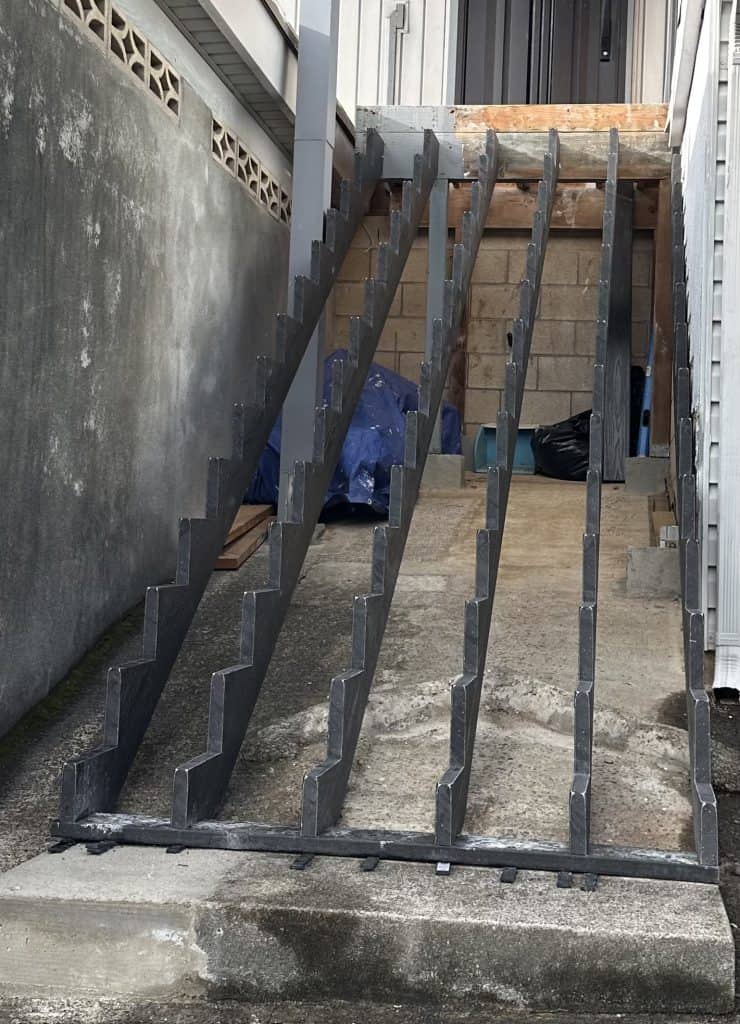
Deck stairs connect your deck to the ground or another level. Many homes in Oahu have one or multiple sets of stairs that will need to be rebuilt during a deck renovation project. They include stringers (angled supports), treads (steps), and risers (vertical faces). Proper spacing and secure framing ensure safety and comfort when walking up or down.
Example of Stairs
Example of Stair Stringers Using OC Lumber (Build in Progress) - Honolulu, HI
Frequently Asked Questions: Parts of a Hawaii Deck
What are the main structural parts of a deck?
A deck is made up of footings, posts, beams, joists, the ledger board (when attached to the home), deck boards, fascia, railings, and stairs. These elements work together to create a safe and durable outdoor structure.
What is the purpose of deck footings?
Footings anchor the deck to the ground and carry its weight. In Hawaii, many decks use a post-and-pier style footing—similar to older plantation-style homes—because it works well with our sloped terrain and need for airflow. Due to high rainfall and softer coastal soils, footings here often require deeper placement and stronger reinforcement to prevent shifting over time.
How do beams support a deck?
Beams run horizontally between the posts and distribute the deck’s weight. They support the joists above and form the main structural backbone of the deck.
What do posts do in a deck structure?
Posts support the beams and help transfer the deck’s weight into the footings. They determine the height of the deck and are especially important for homes with slopes or uneven terrain.
What are joists and why are they important?
Joists run across the beams and hold the deck boards. Their spacing and condition influence how sturdy and comfortable the deck feels when you walk on it.
What is a ledger board?
The ledger board connects the deck to the home when designing an attached deck. It supports one side of the joists and must be properly secured and flashed to prevent moisture damage.
What other deck components are not covered in this blog?
This guide focuses on core structural elements. Additional features like lighting, pergolas, privacy screens, under-deck drainage, and decorative elements can enhance the deck but are not part of the main structural framework discussed here.
How do all these deck parts work together?
Footings anchor → posts support → beams distribute weight → joists create the platform → ledger (if used) connects the deck to the home → deck boards form the surface → fascia finishes the edges → stairs provide safe access.
How do I know if part of my deck needs repair or replacement?
Signs include soft or spongy areas, sagging sections, loose railings, or visible rot around joists, beams, or posts. A professional assessment helps determine whether repairs are enough or if a full rebuild is recommended.
Final Thoughts: Why Knowing These Parts Matters
Understanding the basic parts of your deck helps you spot issues early — such as soft spots, loose railings, or wood rot — and ensures you can discuss solutions confidently with your contractor.
At Hawaii Deck Builders, we specialize in deck substructure repair and replacement across Oahu, using high-quality materials designed for island conditions. Whether your deck is built from Trex®, TimberTech®, or natural wood, our licensed team can assess, rebuild, or refinish it to last for years to come.
Disclaimer: The information shared in this article is for educational and informational purposes only. Every home and project in Hawaii is unique, and building codes, permits, and HOA requirements may vary by location. We recommend consulting with a licensed contractor and verifying all local regulations before starting any work. Our goal is to help Oahu homeowners make informed decisions — not to replace personalized professional guidance.
Meet the Blog Writers
Chad Hilweh, General Contractor
Chad grew up in Kaaawa and has lived in Oahu since he was three years old. After graduating high school in Kaneohe, he spent more than a decade honing his craft in the construction industry, working for a local general contractor. In 2019, he launched Hilweh Builders LLC, driven by his passion for quality carpentry and community values. In 2024, Chad co-founded Hawaii Deck Builders, focusing exclusively on creating beautiful and durable outdoor living spaces. As team leader, he remains hands-on in every project—ensuring exceptional craftsmanship and personalized attention.
Liana Hilweh, CPA
Liana is a seasoned Certified Public Accountant and graduate from University of Washington (Tacoma). With 17+ years of experience in tax, financial management, and business operations she has served in leadership roles such as Tax Manager at Moss Adams LLP (now Baker Tilly), Job Cost Accountant and Assistant Controller for a Large Contractor, and Managing Director at Hawaii Accounting LLC. As co-owner of Hawaii Deck Builders, Liana manages estimates, scheduling, marketing, and finances—ensuring the business runs smoothly so Chad and the team can focus on building excellence.
Contact Us
Schedule a Free Consultation
We will not send you spam email or sell your information