Does a Deck Require a Permit on Oahu?
Yes — most decks on Oahu require a building permit.
On Oahu, decks are generally considered structures under local building and zoning regulations. Because of structural safety, hurricane wind exposure, drainage, and lot coverage requirements, most residential decks must be reviewed, permitted, and inspected before construction begins.
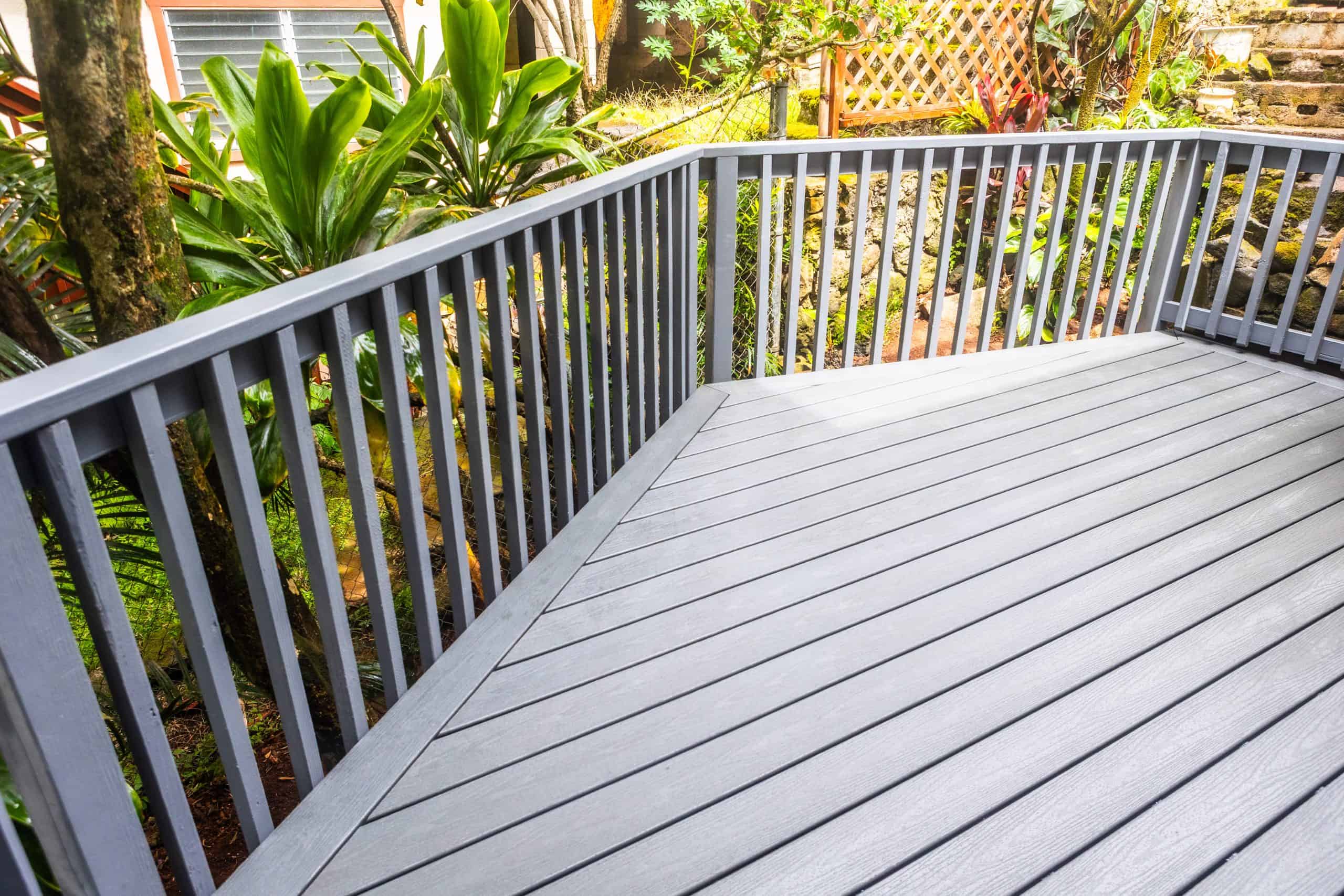
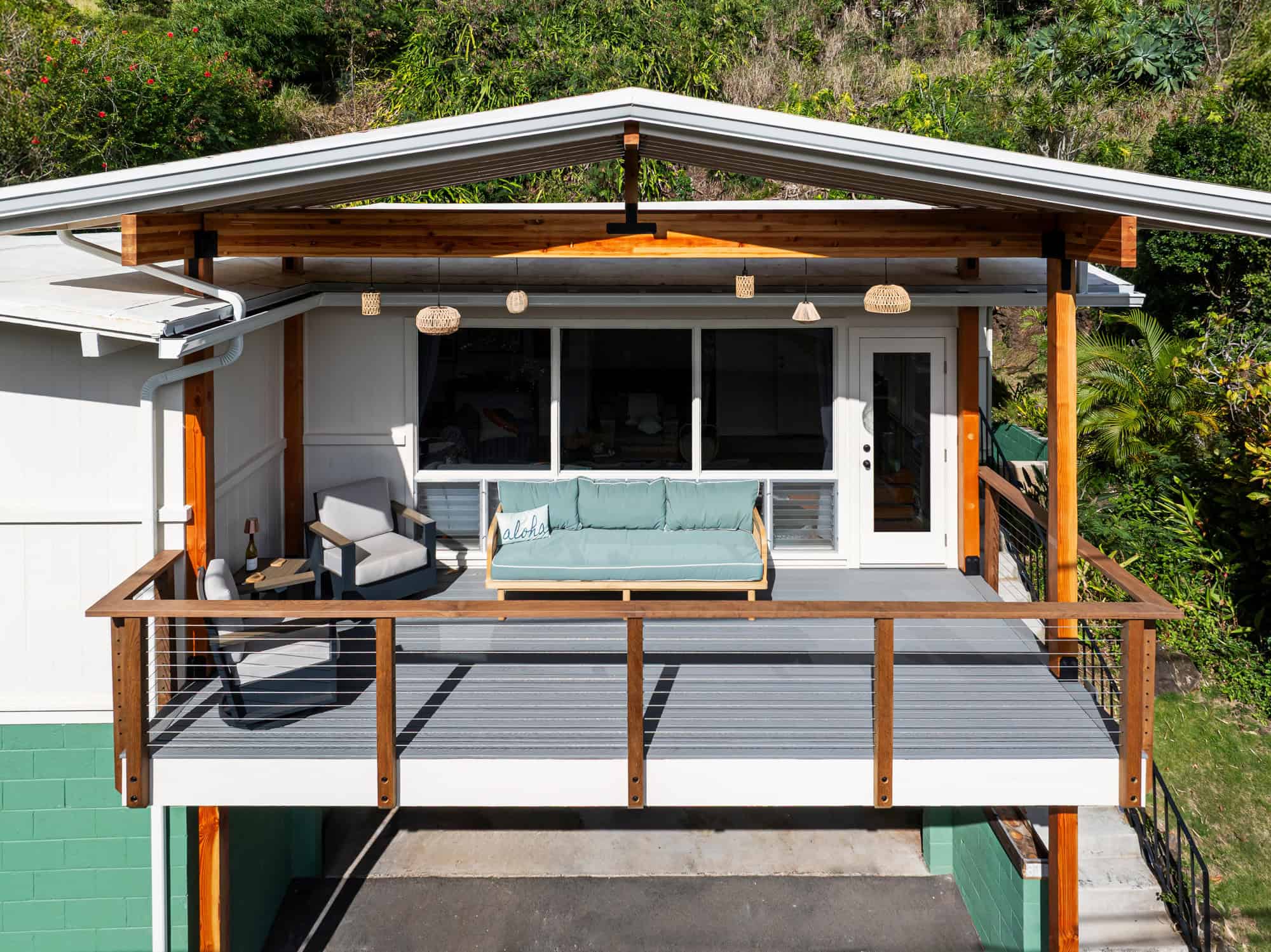
Deck permits on Oahu are administered by the City and County of Honolulu Department of Planning and Permitting (DPP). These requirements apply to new decks. For example, the photos above shows a new deck that was permitted.
This guide explains what homeowners need to know before building a deck on Oahu — including permit rules, impervious surface limits, risks of unpermitted construction, and how to plan a permitted project from start to finish.
Short Answer — Yes, Most Decks on Oahu Require a Permit
If a deck is intended to be a permanent outdoor living space, it almost always requires a permit.
Permits are commonly required for:
New decks
Elevated decks
Yard decks
Decks with posts, footings, railings, or stairs
On Oahu, permitting and enforcement are handled at the county level, and requirements may differ from other islands in Hawaii. For additional clarification on what requires a permit, homeowners can review the Building Permit FAQ published by Honolulu DPP.
Why Decks Are Regulated on Oahu
Deck permitting exists to protect safety, property, and surrounding areas.
Structural Safety and Hurricane Wind Loads
Oahu is exposed to strong winds and storm events. A properly permitted deck must be designed to:
Resist uplift and lateral movement
Remain stable during high-wind conditions
Avoid shifting, settlement, or structural failure
Decks that are not properly anchored or engineered can move or fail during severe weather.
Drainage, Stormwater, and Lot Coverage
Decks can impact how water moves across a property. Improper drainage or excessive coverage can:
Increase runoff
Contribute to localized flooding
Affect neighboring properties
Permit review helps ensure compliance with stormwater and zoning standards.
Are There Any Exceptions or Exemptions?
Possibly — but they are limited and commonly misunderstood.
Yard Decks and “Platforms”
Homeowners often ask whether a deck built in the yard can be treated as a simple platform that does not require a permit.
In practice, most decks intended for regular use are reviewed as permitted structures, even when located away from the home.
Why?
A safe deck cannot simply sit unsecured on the ground
Unanchored platforms are vulnerable to hurricane winds and shifting
Decks often affect drainage and impervious surface calculations
Recreational use implies permanence, not temporary use
Temporary platforms and certain accessory structures (such as small movable sheds) may qualify for exemptions, but those exemptions are not clearly intended for outdoor living decks.
If a deck is meant for relaxing, gathering, or daily use, homeowners should assume a permit is required unless confirmed otherwise by Honolulu DPP.
Why Visual Simplicity Does Not Mean Permit-Free
A deck may still require a permit even if it looks simple. Common triggers include:
Posts, piers, or footings
Structural framing
Guardrails or stairs
Anchoring or leveling systems
Visual simplicity does not eliminate regulatory requirements.
Impervious vs Permeable Surfaces and Why This Matters
Deck permits on Oahu are often reviewed alongside impervious surface limits.
What Is Impervious Surface?
Impervious surfaces prevent water from soaking into the ground and may include:
Roofs
Concrete patios
Driveways
Some deck designs, depending on construction and drainage
Residential Impervious Surface Limits on Oahu Properties
In many residential zoning districts on Oahu:
Up to 75% of the lot area may be covered by impervious surfaces
This includes existing coverage, not just new construction under the Honolulu Land Use Ordinance.
Impervious surface limits are a common issue during Honolulu DPP deck permit review, particularly on smaller lots or properties with existing patios and driveways.
Whether a deck is classified as impervious is determined case by case during plan review.
What Happens If You Build a Deck Without a Permit
Building without a permit carries real risk.
Stop Work Orders and Enforcement
If unpermitted work is discovered:
Construction may be stopped immediately
Enforcement notices may be issued
Additional fees and delays can occur
Removal, Redesign, or Rebuilding
Homeowners may be required to:
Remove the unpermitted deck entirely, or
Substantially modify it to meet code
Variances Are Not Guaranteed
While variances may be requested:
Approval is discretionary
Variances are typically granted only for true hardship
Many decks are not approved as-built
Permitting after construction is risky and often more expensive than permitting upfront.
What If You Are at or Near Your Impervious Surface Limit?
There may still be options.
Permeable Outdoor Living Alternatives
Depending on site conditions, alternatives may include:
Permeable pavers
Gravel systems with structural grid support
Ground-level permeable outdoor spaces
Landscaped gathering areas
Feasibility must be evaluated during planning.
Early Planning Prevents Redesign
Impervious surface challenges are best addressed:
Before drawings are finalized
Before permit submission
Before construction begins
How We Help Homeowners Build a Permitted Deck on Oahu
We regularly help homeowners on Oahu navigate deck design, permitting, and construction while coordinating with Honolulu DPP and required consultants.
Design and Planning
We collaborate with:
Draftsmen and architects to develop permit-ready layouts
Structural engineers when required
Homeowners to align design goals with zoning and coverage limits
Permitting and Applications
We assist with:
Coordinating permit drawings
Submitting applications to Honolulu DPP
Responding to plan review comments
Managing revisions when required
Construction and Inspections
Once approved, we:
Build according to permitted plans
Schedule required inspections
Deliver a compliant, fully permitted deck
Planning a permitted deck on Oahu takes coordination, but with the right team, the process can be straightforward.
Frequently Asked Questions
Permit Basics for New Decks
Do I need a permit to build a new deck on Oahu?
Yes. Most new decks on Oahu require a building permit and are reviewed by the City and County of Honolulu Department of Planning and Permitting (DPP).
New decks are generally considered structures and are subject to review for structural safety, zoning compliance, drainage, and lot coverage.
How long does it take to get a deck permit on Oahu?
It varies greatly. Homeowners should plan for approximately 6–18 months from early planning through permit approval. Some projects move faster, while others take longer depending on design complexity, zoning, engineering needs, and review comments from the City and County of Honolulu Department of Planning and Permitting.
Having the right team in place early can make the process more efficient and help avoid unnecessary delays.
If my deck is in the yard and not attached to the house, does it still need a permit?
Often, yes.
A common misconception is that a yard deck can be treated as a simple platform. In practice, most decks intended for regular use are reviewed as permanent structures, even when located away from the home.
Wind resistance, drainage impacts, and permanence all factor into permitting decisions.
If my new deck will not be covered by a roof, does it still need a permit?
Yes. Most new decks on Oahu require a permit whether or not they are covered by a roof.
Permitting is based on the deck being a structure, not on whether it has a roof. Structural safety, wind resistance, zoning, and impervious surface impacts are still reviewed by the City and County of Honolulu Department of Planning and Permitting.
If I want to increase the square footage of my deck, do I need a permit?
Yes. Increasing the size of a deck on Oahu is considered new construction and typically requires a building permit, even if the original deck was permitted or the increase is small.
Adding square footage can affect structural design, impervious surface limits, and zoning setbacks, which must be reviewed by the City and County of Honolulu Department of Planning and Permitting.
Can I build a new deck myself without a permit? What are the risks?
Building a new deck without a permit on Oahu is risky. Unpermitted decks can lead to stop-work orders, fines, required removal, or the need to redesign and rebuild the deck to meet code.
Even if the work looks solid, unpermitted construction can create issues during inspections, property sales, or insurance claims.
Impervious vs Permeable Surfaces
What does “impervious surface” mean in plain terms?
Impervious surfaces prevent rainwater from soaking naturally into the ground.
Examples include roofs, concrete patios, driveways, and in many cases, decks. Impervious surface limits exist to manage stormwater runoff and reduce flooding risk.
If my deck is not covered, does that mean it is permeable?
Not necessarily.
Even uncovered decks are often treated as impervious or semi-impervious during permit review. The fact that rain can fall through deck boards does not automatically make a deck permeable under zoning or stormwater standards.
Why would an uncovered deck still be considered impervious?
When reviewing a new deck permit, Honolulu DPP may evaluate:
Whether water can infiltrate the soil below the deck
Whether the ground below is compacted, paved, or disturbed
Whether the deck alters drainage patterns
Whether the deck functions as a permanent outdoor floor area
Impervious determinations are based on how water behaves, not just whether it can pass through the decking material.
Are decks always considered impervious on Oahu?
Not always — but it depends on the overall design and site conditions.
Impervious surface classification is determined case by case during permit review. Two similar decks may be treated differently depending on drainage, soil, and lot coverage.
Zoning, Setbacks, and Property Constraints
What zoning rules can limit where I build a new deck?
Zoning regulations may affect:
Side and rear yard setbacks (often 5 feet, depending on zoning)
Deck height and size
Proximity to property lines
Lot coverage limits
A deck that meets structural requirements may still be restricted by zoning rules.
Can setbacks prevent me from building a deck where I want?
Yes.
Even a ground-level or yard deck may not be allowed if it encroaches into required setback areas. Setback rules are commonly enforced during permit review.
Community and Ownership Restrictions
Do AOAO or HOA rules apply even if the City allows the deck?
Yes.
If you live in a condo, townhome, or planned community, AOAO or HOA approval may be required in addition to City permits.
Community rules can be more restrictive than zoning and often govern appearance, size, materials, and attachment methods.
Site Conditions That Affect Deck Design
How do soil conditions affect deck permitting on Oahu?
Soil conditions can impact:
Footing size and depth
Structural design
Whether a structural engineer is required
Poor soil or fill areas may limit design options or increase construction requirements.
What if my property is on a slope?
Building a deck on a slope often requires additional planning.
Sloped sites may involve taller posts, increased structural loads, drainage coordination, and engineering review. Slopes can also affect impervious surface calculations.
Planning and Next Steps
Why do deck permits feel complicated on Oahu?
Deck permits often involve overlapping considerations:
Structural safety
Hurricane wind exposure
Zoning and setbacks
Impervious surface limits
Drainage requirements
Community rules
These factors are evaluated together, not in isolation.
What is the best first step if I want to build a new deck on Oahu?
Start with planning before construction begins.
This includes:
Understanding zoning and setbacks
Reviewing impervious surface limits
Evaluating site conditions
Coordinating with draftsmen, engineers, and licensed contractors
Early planning helps ensure the deck you envision can be permitted and built successfully.
Important Disclaimer
This article is provided for general informational purposes only and does not constitute legal, architectural, engineering, or professional advice.
Permit requirements and zoning regulations vary by property and project scope. Homeowners should always consult with:
A licensed architect or draftsman
A licensed structural engineer
A licensed contractor
The City and County of Honolulu Department of Planning and Permitting
before beginning any deck or outdoor construction project.