If you have a deck in Hawaii, regular safety checks matter. Our climate is hard on exterior structures. Strong sun, heavy rain, salt air, termites, moisture, and older building methods can all affect how a deck performs over time.
On Oahu, what your deck is exposed to can make a big difference. A deck near the ocean may deal with faster corrosion. A deck on the Windward side may see more moisture and mildew. A deck in a sunnier area may experience more heat, UV wear, surface drying, and coating breakdown. Rooftop decks, elevated lanais, and tiled decks over living space also tend to have their own problem areas.
This checklist is meant to help homeowners look for common warning signs. It is a helpful starting point, but it is not the same as a professional evaluation. The NADRA checklist is also intended to assist homeowners and does not confirm that a deck is code-compliant or structurally sound.
Is deck safety in Hawaii different?
Yes — Hawaii’s climate can wear out decks faster than many homeowners expect.
Strong sun, heavy rain, salt air, termites, moisture, and older building methods can all affect how a deck performs over time. Because of that, regular deck safety checks are especially important here.
Does my location on Oahu make a difference?
Yes — where your home is located can affect how your deck ages.
A deck near the ocean may deal with faster corrosion. A deck on the Windward side may see more rain, moisture, and mildew. A deck in a sunnier area may experience more UV wear, heat, surface drying, and coating breakdown. Rooftop decks, elevated lanais, and tiled decks over living space can also have their own problem areas depending on how they were built and exposed.
Is this checklist enough to confirm my deck is safe?
No — it is a helpful starting point, but it is not the same as a professional evaluation.
This checklist is meant to help homeowners look for common warning signs and know what to pay attention to. The NADRA checklist is also intended to assist homeowners and does not confirm that a deck is code-compliant or structurally sound.
Talk to Hawaii Deck Builders About Deck Safety Concerns
If you are concerned about your deck, rooftop deck, lanai, or tiled exterior deck surface, we can help you think through the next steps.
At Hawaii Deck Builders, we work with homeowners on Oahu to identify warning signs, evaluate deck conditions, and determine whether repair or replacement may make the most sense. Depending on the project, we may charge a fee for site visits, assessments, or planning.
If your deck is showing signs of wear, it is usually better to check it sooner rather than later.
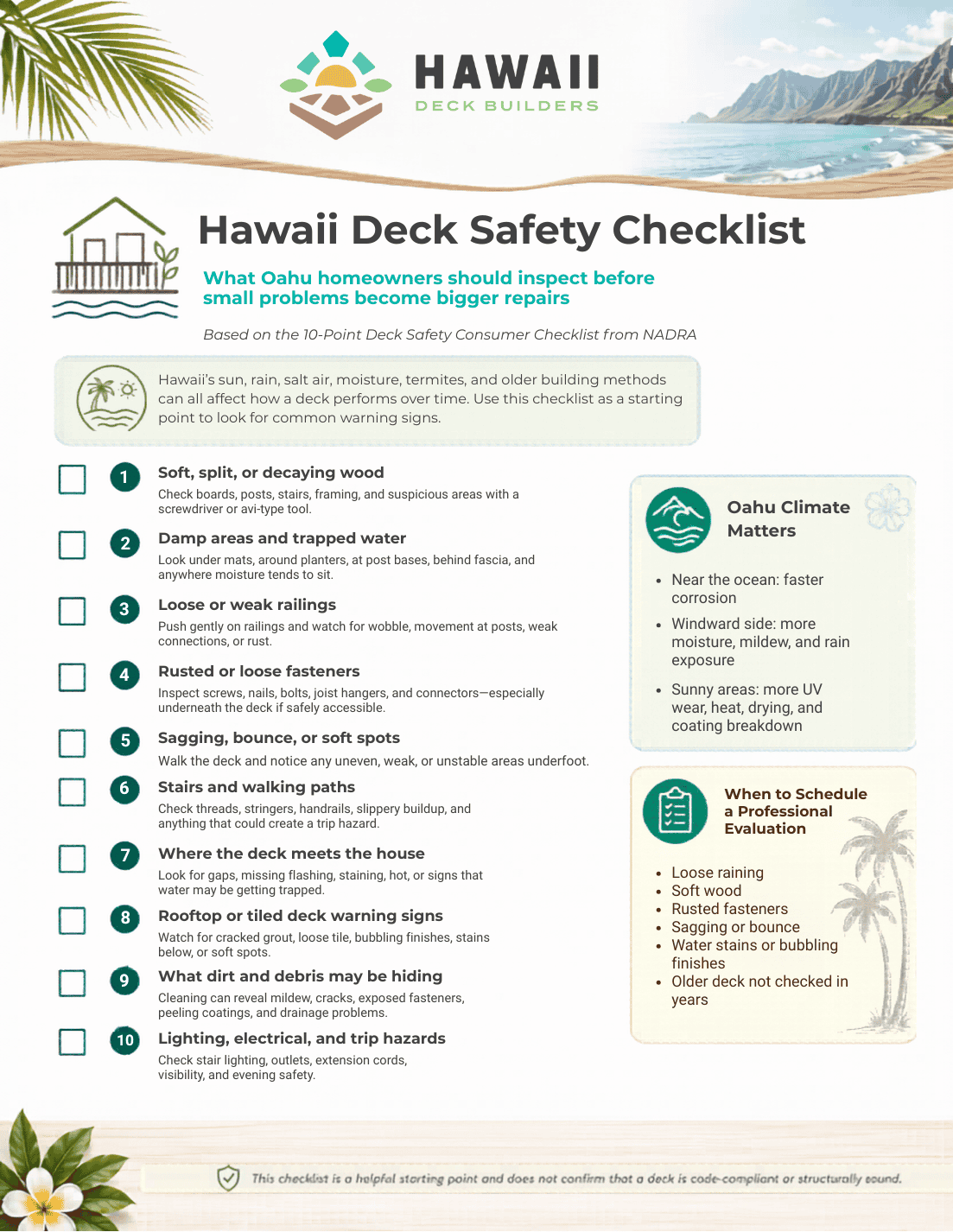
Hawaii Deck Safety Checklist
1. Check for soft, split, or decaying wood
Look at all visible wood parts of the deck, including:
- deck boards
- railings
- posts
- stairs
- framing visible from below
- the area where the deck attaches to the house
Use a screwdriver or awl-type tool to press into any suspicious area. If the wood feels soft, flakes apart, feels spongy, or is easy to penetrate, decay may be present. The NADRA checklist also recommends checking for split or decaying wood and using a tool to test suspicious areas.
Helpful Hawaii examples:
- Around planters or areas that stay wet
- Around fasteners where water sits
- At stair treads and stair stringers
- At the bottoms of posts
- At shaded areas that do not dry quickly
- At transitions between deck surfaces and the house
2. Pay attention to damp areas and places where water gets trapped
In Hawaii, moisture management is a big deal. Water does not need much space to create damage over time.
Check:
- where leaves and debris collect
- under outdoor mats or rugs
- behind fascia boards
- near posts and railing bases
- where the deck meets walls or doors
- low spots where water tends to sit
Helpful Hawaii examples:
- Windward-side decks may stay damp longer after rain
- Covered areas can still trap moisture if airflow is poor
- Tiled decks may hide water problems below the finish surface
If an area always seems wet, that is worth paying attention to.
3. Check railings carefully
Railings are one of the most important safety items on a deck. They should feel firm and stable. The NADRA checklist says railings and banisters should be secure.
Push on the railing gently in different areas and look for:
- wobbling
- movement at the posts
- loose brackets or connections
- rot at the base of wood posts
- rust at metal connections
- separation where the railing meets the deck framing
Helpful Hawaii examples:
- Wood posts that were notched during installation can be weakened
- Railings near the ocean may have faster corrosion at screws, bolts, or brackets
- Older decks may have railing details that no longer feel solid even if they still “look okay”
If a railing moves, it deserves attention.
4. Look for rusted or loose fasteners and connectors
Fasteners and connectors hold the deck together. The NADRA checklist recommends checking for loose or corroded fasteners.
Look for:
- rusted screws
- popped nails
- loose bolts
- corroded joist hangers
- failing connectors
- staining around metal hardware
- areas where metal looks swollen, flaky, or worn
Helpful Hawaii examples:
- Decks near the coast often need better corrosion resistance
- Lower-cost steel fasteners may fail much faster than stainless or coastal-rated products
- Rust can stain surrounding wood and also weaken the connection over time
Do not just look at the top of the deck. Check underneath too if you can do so safely.
5. Check whether the deck feels level, stable, and solid
The NADRA checklist notes that the deck and stairs should appear even and should not sway or move when tested.
Walk the deck and notice:
- soft spots
- bounce
- sagging
- movement underfoot
- uneven transitions
- areas that feel different from the rest of the deck
Helpful Hawaii examples:
- A soft area on a tiled deck may point to hidden water damage below
- A sagging area may mean framing damage or failed connections
- A deck may feel solid in one area and weak in another, which can help narrow down where damage is concentrated
If something feels off, do not ignore it just because it still looks okay.
6. Inspect stairs and walking paths
Stairs are a common place for accidents and deterioration. The NADRA checklist recommends checking rails, handrails, risers, stringers, and keeping stairs free of tripping hazards.
Check for:
- loose handrails
- soft stair treads
- cracked or split treads
- unstable stringers
- slippery mildew buildup
- toys, décor, planters, or cords in the pathway
Helpful Hawaii examples:
- Exterior stairs in damp areas often get slippery faster
- Stair treads exposed to full sun may dry, crack, or split over time
- Stair framing near grade can deteriorate faster if drainage is poor
7. Look closely where the deck connects to the house
This is one of the most important areas on any attached deck. The NADRA checklist specifically calls out the ledger board and flashing as key items to inspect.
Check for:
- visible gaps
- loose connections
- missing or damaged flashing
- staining on adjacent walls
- signs of water getting trapped
- rot at trim or siding near the connection
Helpful Hawaii examples:
- Repeated wetting from rain can make hidden damage worse over time
- Older decks may not have flashing done well
- Water intrusion at this area can affect both the deck and the house
This is an area where serious damage can be hidden.
8. Check rooftop decks and tiled decks for waterproofing problems
Rooftop decks and tiled decks over living space often fail differently than standard framed decks.
Look for:
- cracked grout
- loose tile
- bubbling finishes
- staining below
- peeling coatings
- soft spots
- edge rot or deterioration at transitions
Helpful Hawaii examples:
- A tiled deck may look mostly intact on top while water is damaging plywood and framing below
- Waterproofing failures may show up first as ceiling stains below the deck
- Decks with lots of sun and rain cycles can see expansion, cracking, and wear faster
If you have a waterproof deck system, surface appearance alone does not tell the whole story.
9. Clean the deck and notice what the dirt is hiding
The NADRA checklist recommends cleaning away leaves and debris and maintaining the deck surface.
Cleaning is not just maintenance. It also helps you inspect better.
When cleaning, watch for:
- mildew that keeps coming back
- dark spots that stay wet
- peeling coatings
- exposed fasteners
- cracks in boards
- movement in railings
- water not draining properly
Helpful Hawaii examples:
- Windward decks may need cleaning more often because of dampness and mildew
- Sunnier decks may show coating wear faster
- Debris in corners and at edges can trap moisture and hide early damage
10. Check lighting, electrical, and trip hazards
The NADRA checklist recommends checking lighting and electrical features and making sure cords do not create tripping hazards.
Check for:
- working stair and pathway lighting
- broken light covers
- outlets in poor condition
- exposed cords
- extension cords across walkways
- poor visibility at stairs or transitions
This is especially important if you use the deck in the evening.
11. Review furniture, grills, fire features, and trees
The NADRA checklist also recommends checking grills, heaters, candles, furniture, storage, and surrounding trees.
Check for:
- unstable furniture near deck edges
- swings or hammocks with weak support points
- grills or heaters placed too close to combustible materials
- overhanging branches that could fall
- cluttered areas that make walking unsafe
Helpful Hawaii examples:
- Salt air can affect outdoor furniture hardware too
- Tree debris can increase moisture buildup on the deck
- Outdoor living items sometimes hide the condition of the deck surface below
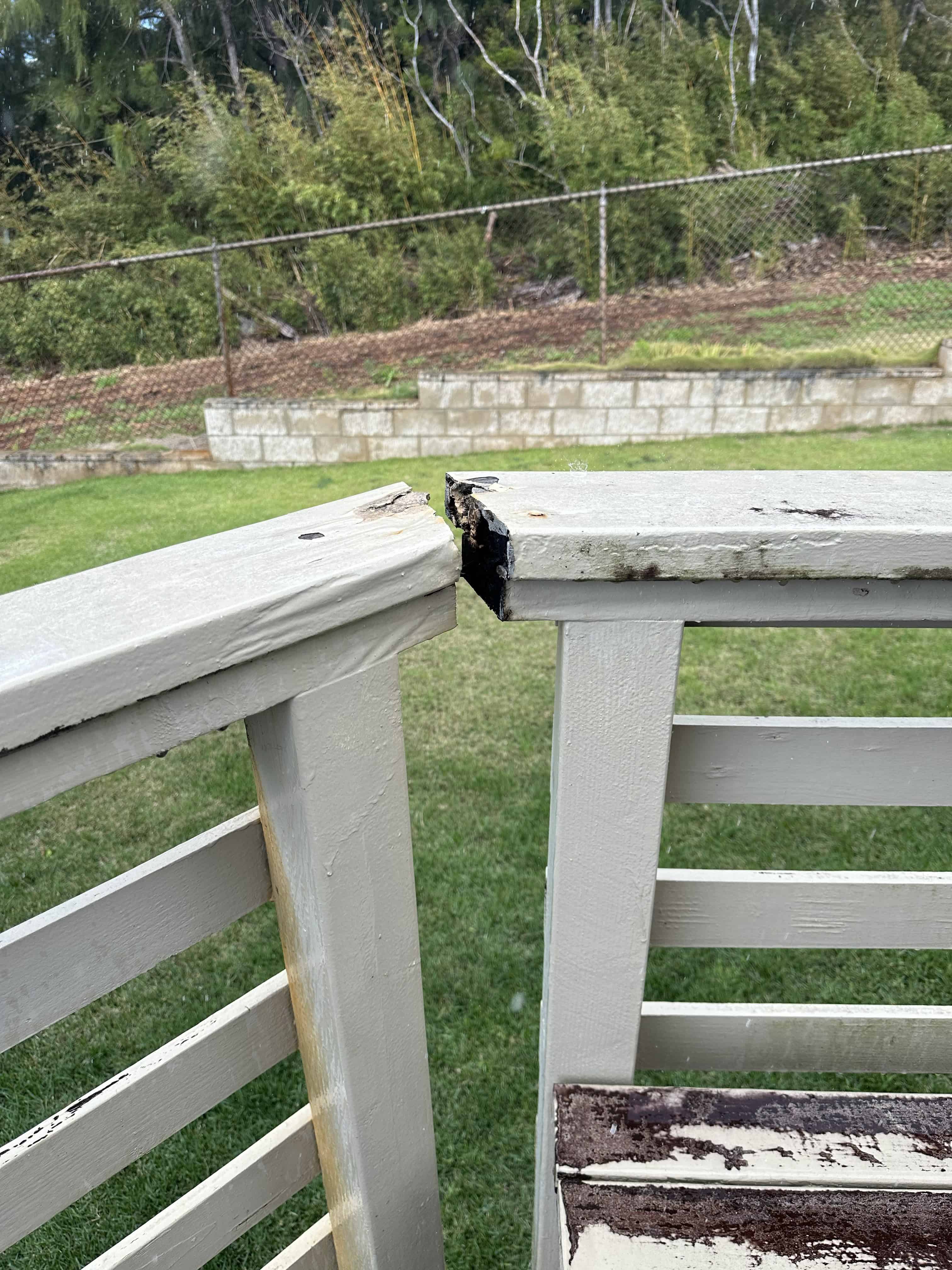
Separated railing on deck showing rot and deterioration
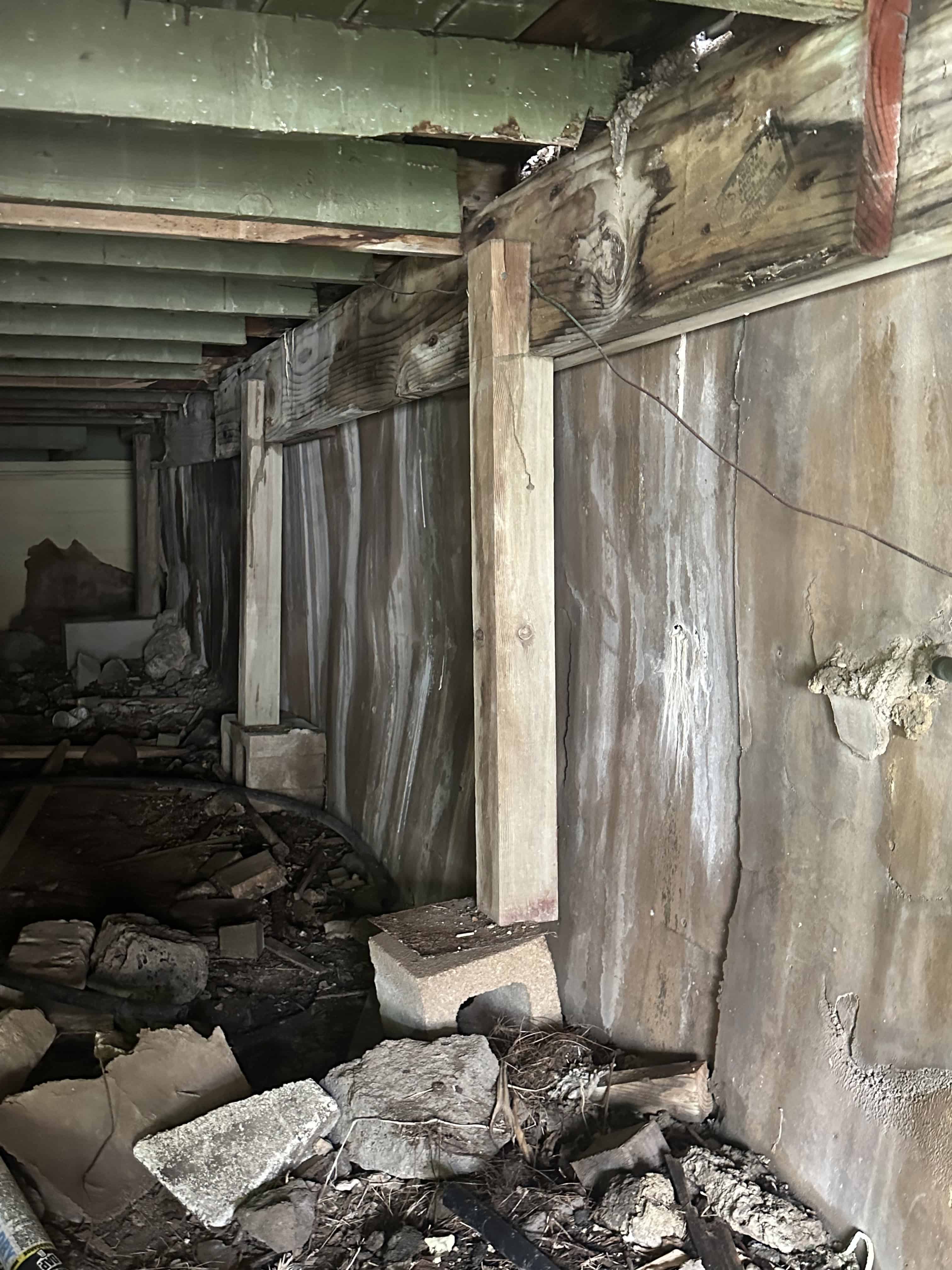
Photo under a deck substructure showing deterioration from being next to a pool. Also shows improper footings.
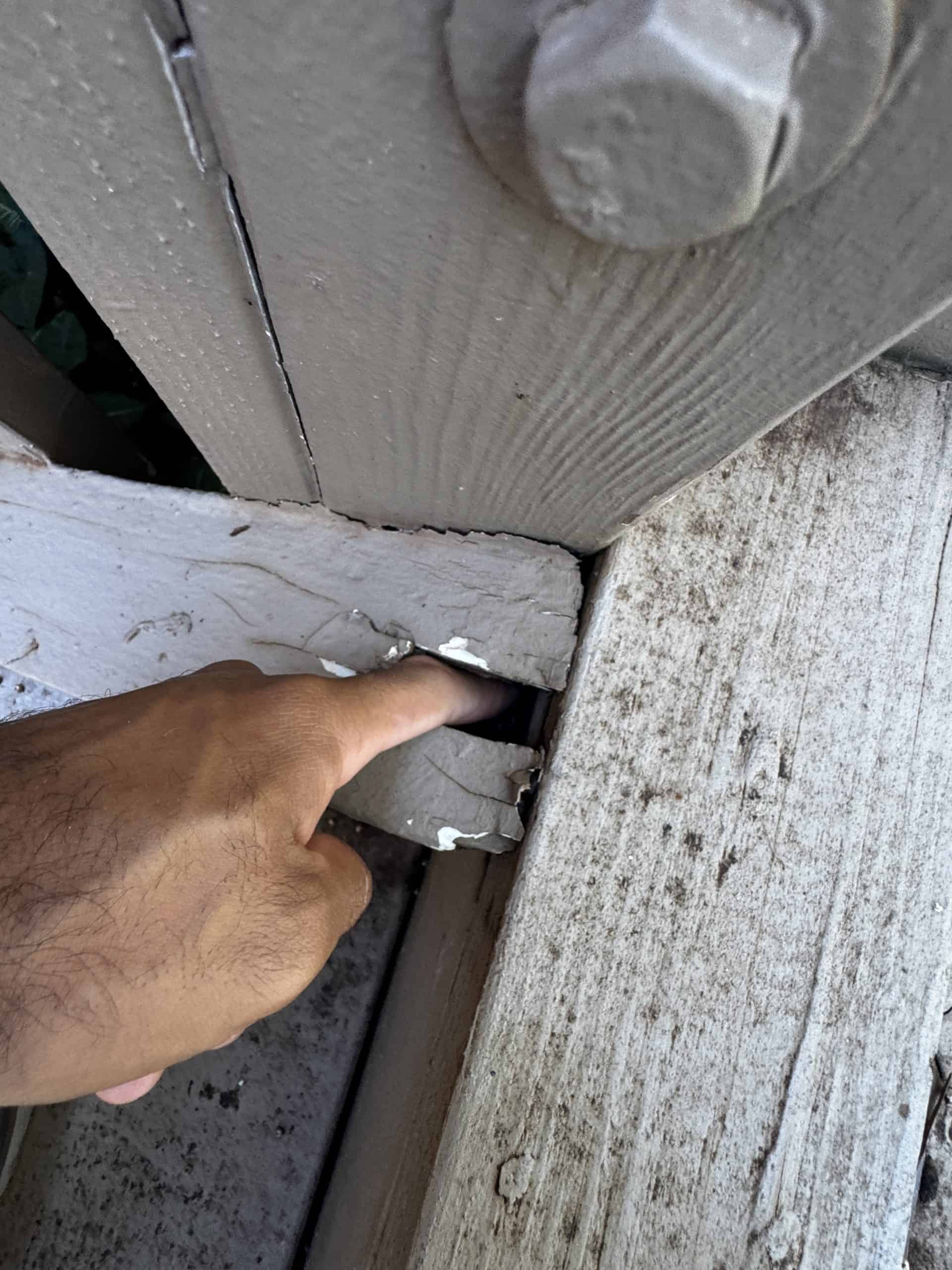
Loss of Structural Integrity in Painted Wood Deck
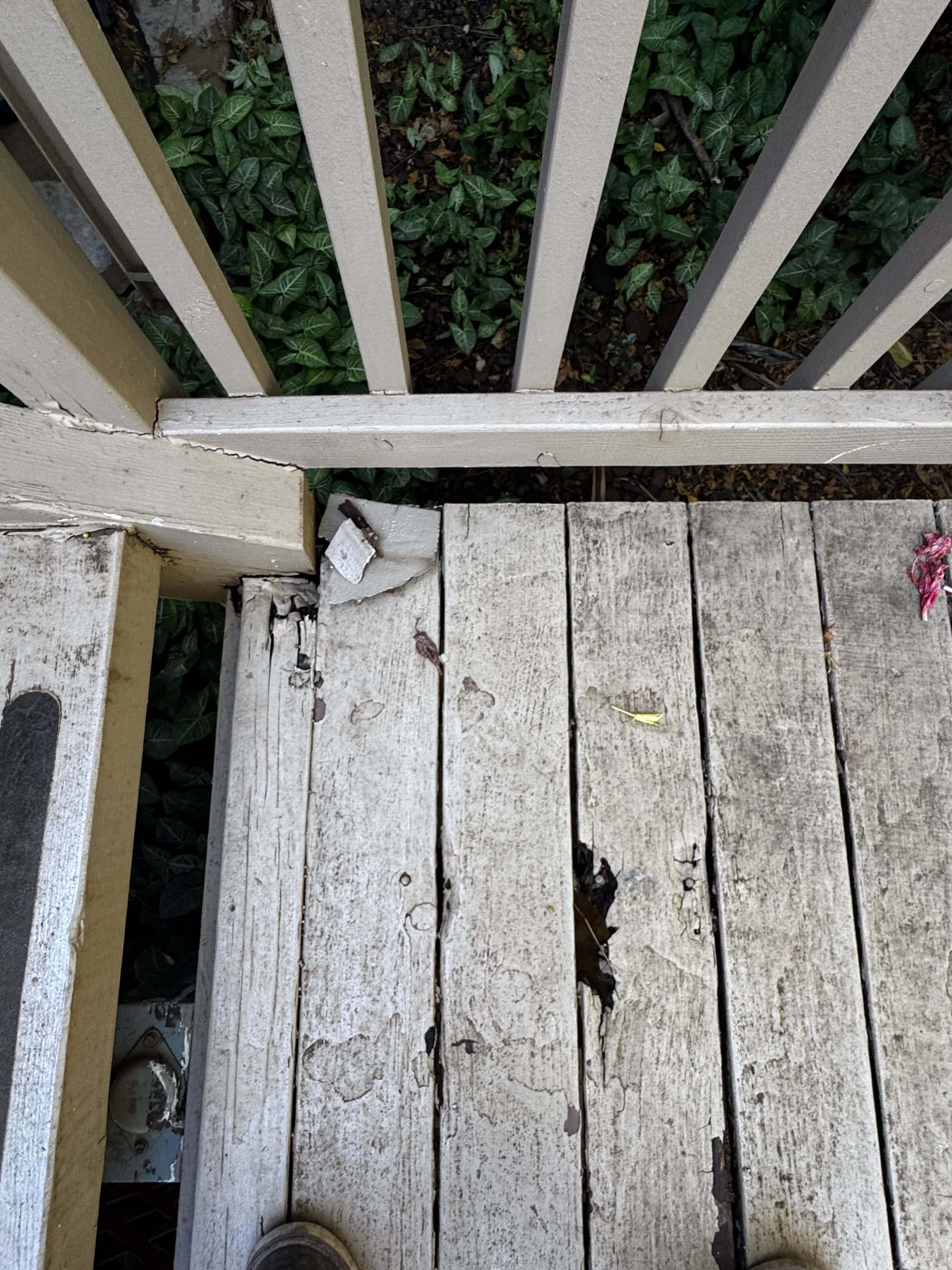
Cracked Paint, Holes in Deck Boards, Accumulated Dirt
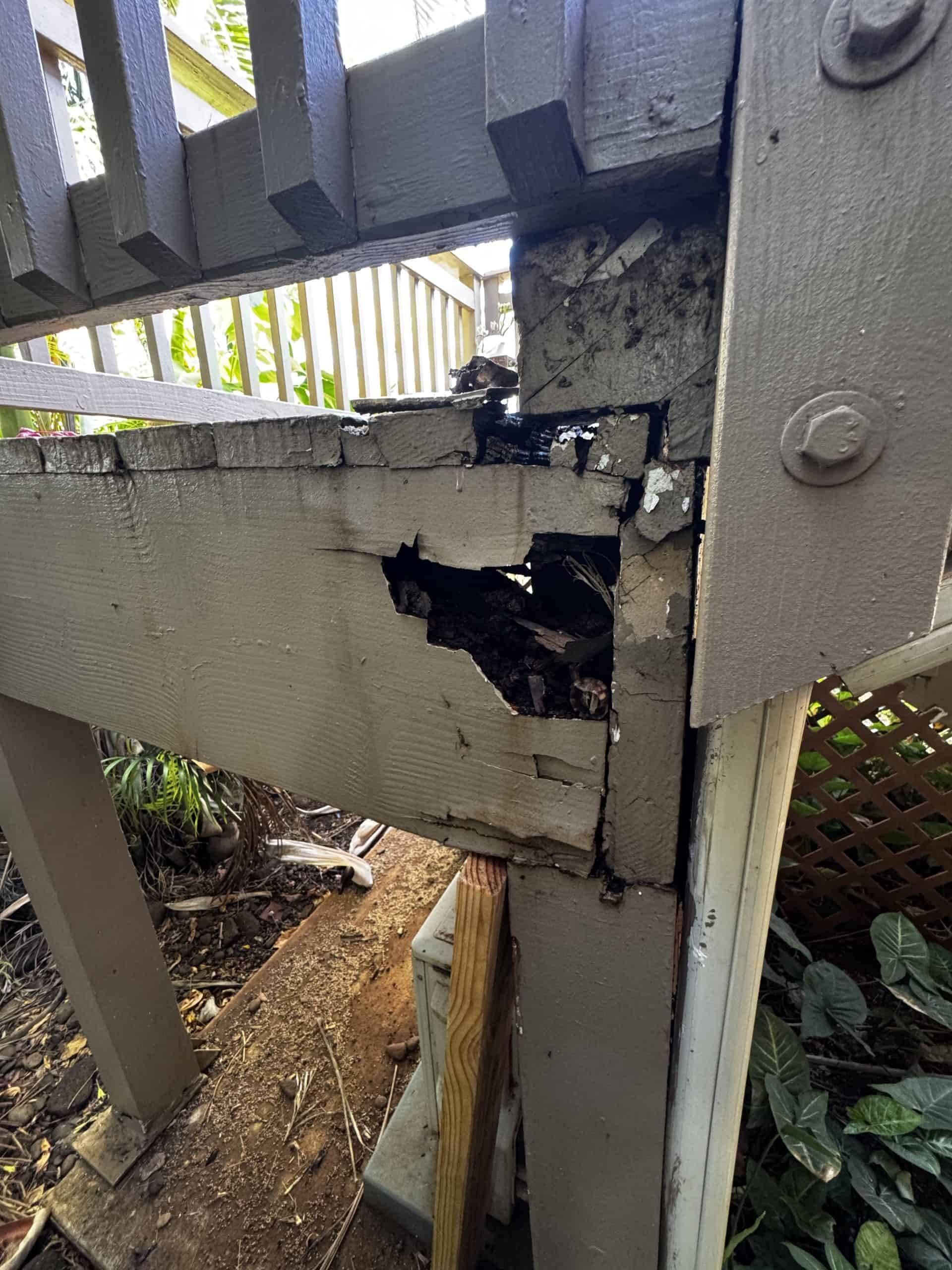
Damage to Structural Member of Deck
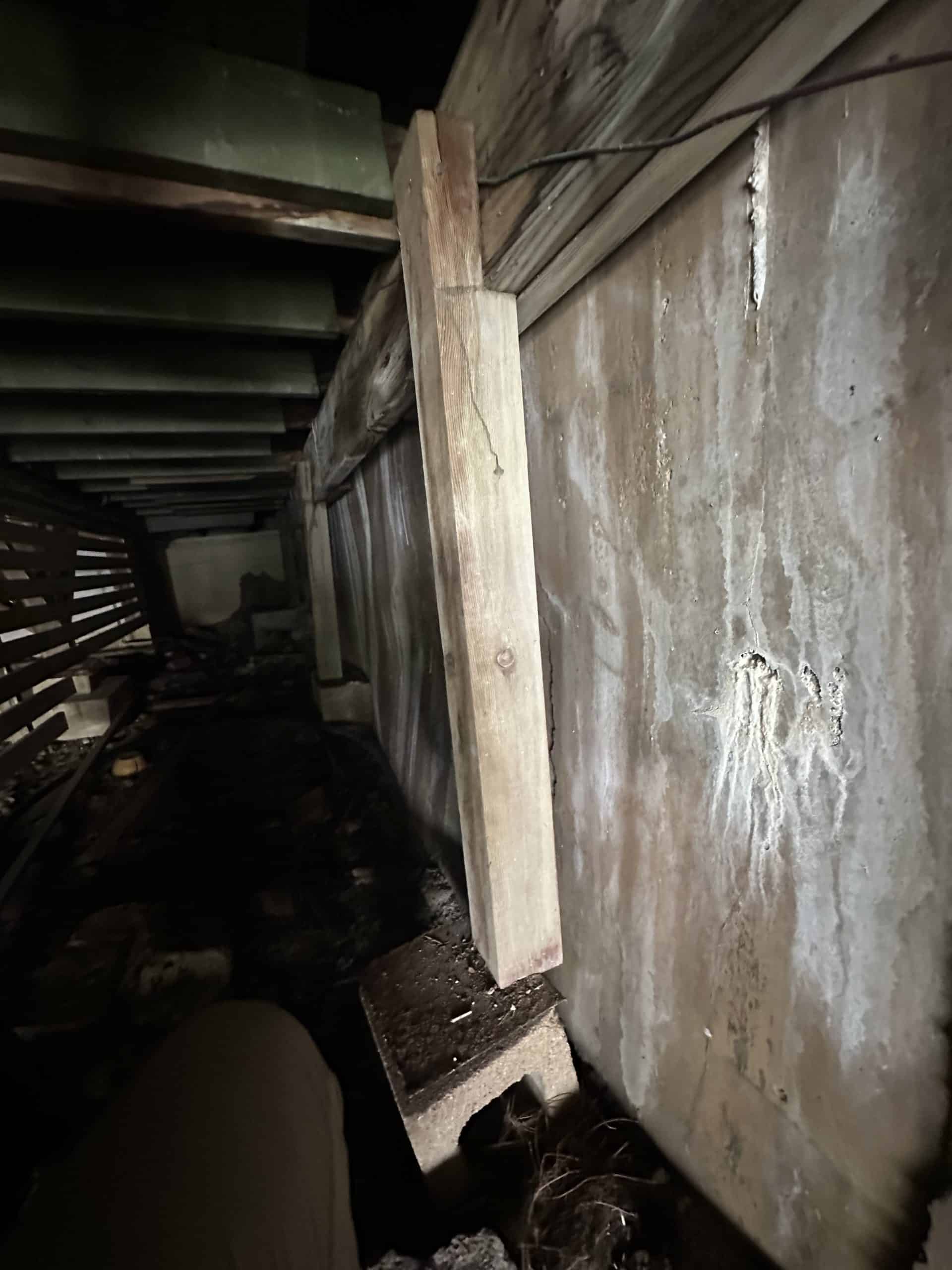
4x4 Post Over Improper Footing - Should Over a Fixed Footing with Appropriate Hardware.
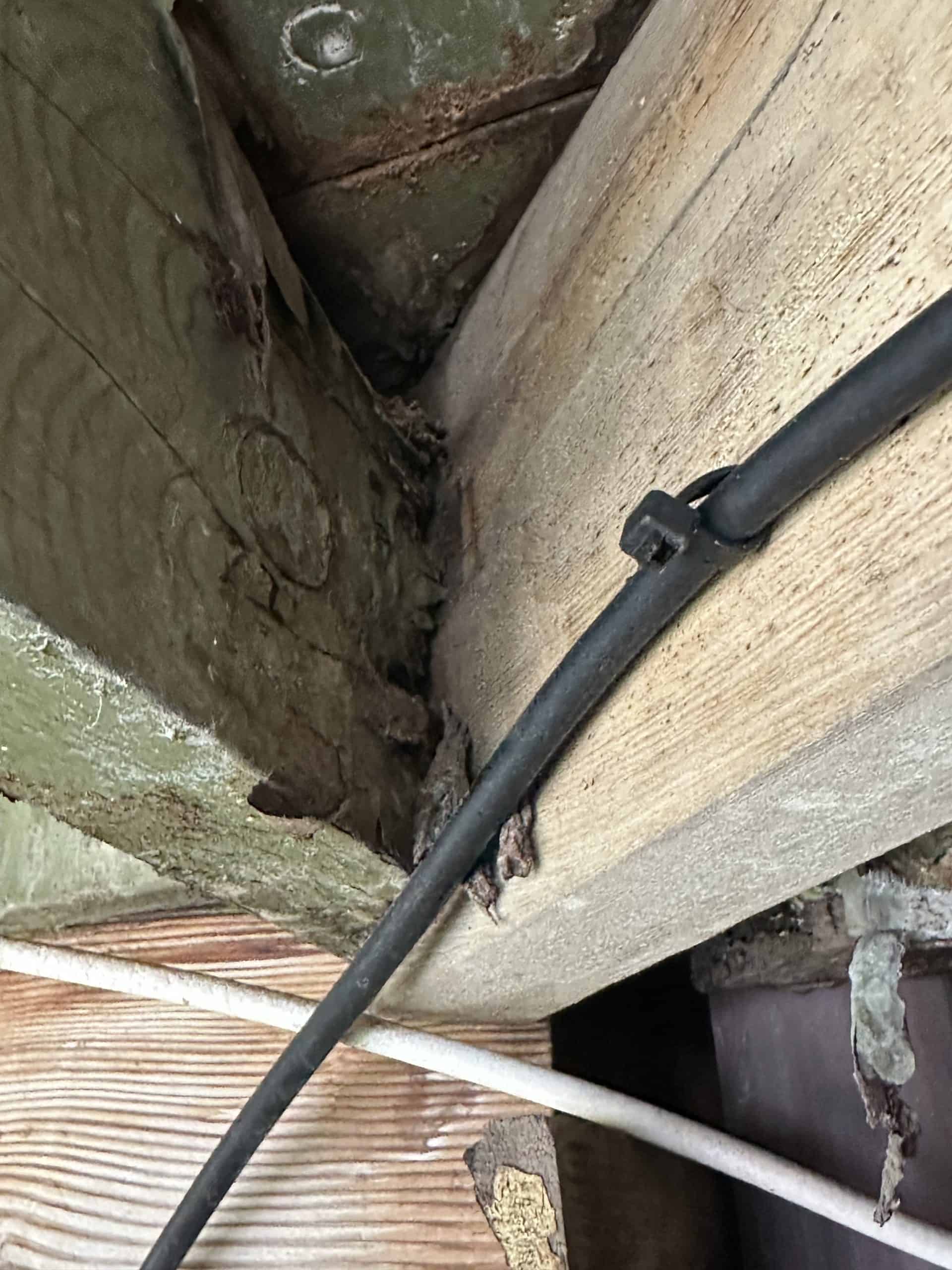
Deck substructure that shows overall deterioration of substructure over time
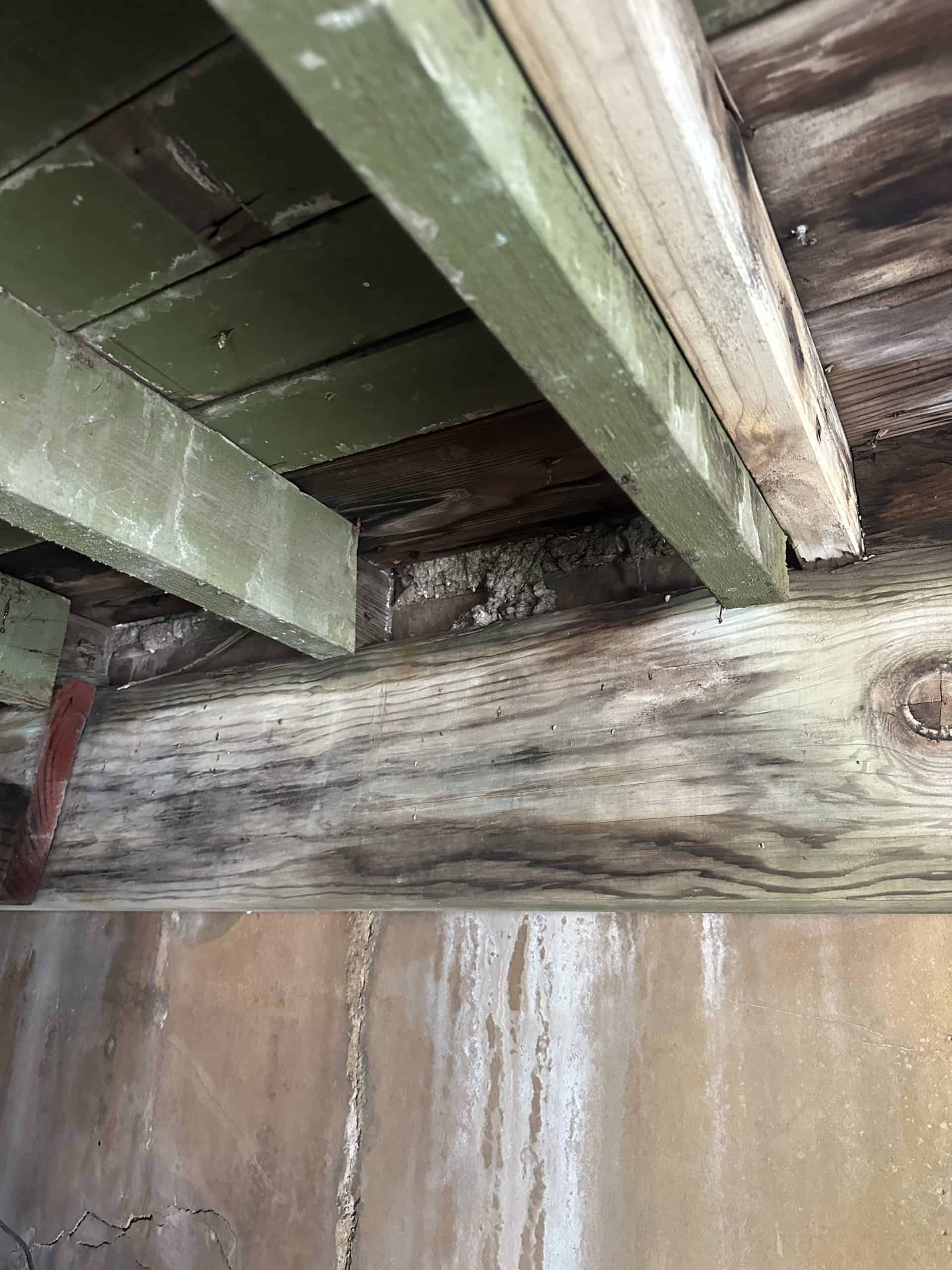
Showing what a deck substructure looks like under a pool area where you can see mineral deposits and overall deterioration that happens over time.
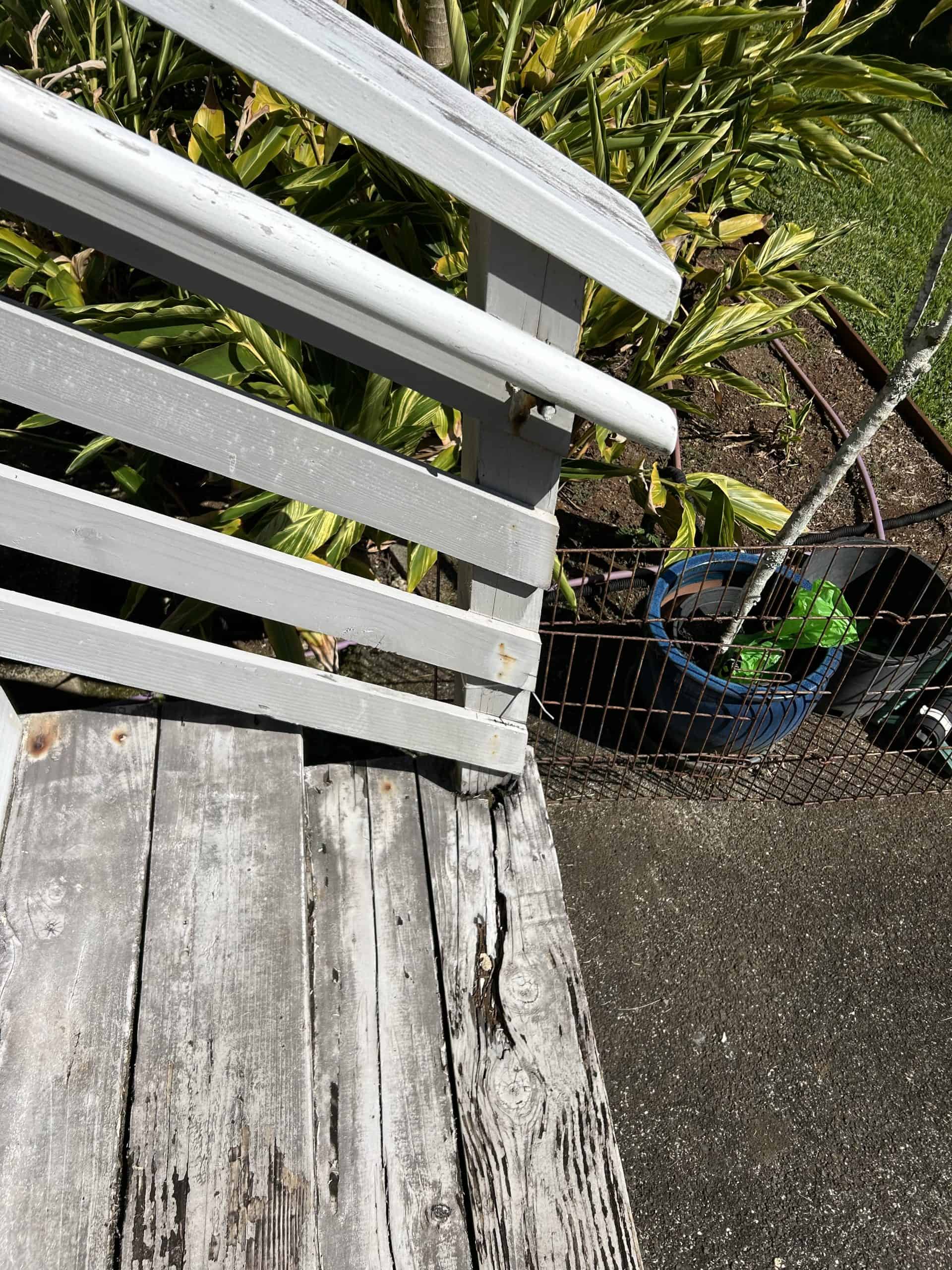
Example of stairs and railing that are deteriorated over time because they are made with wood and wood fails quickly in Hawaii.
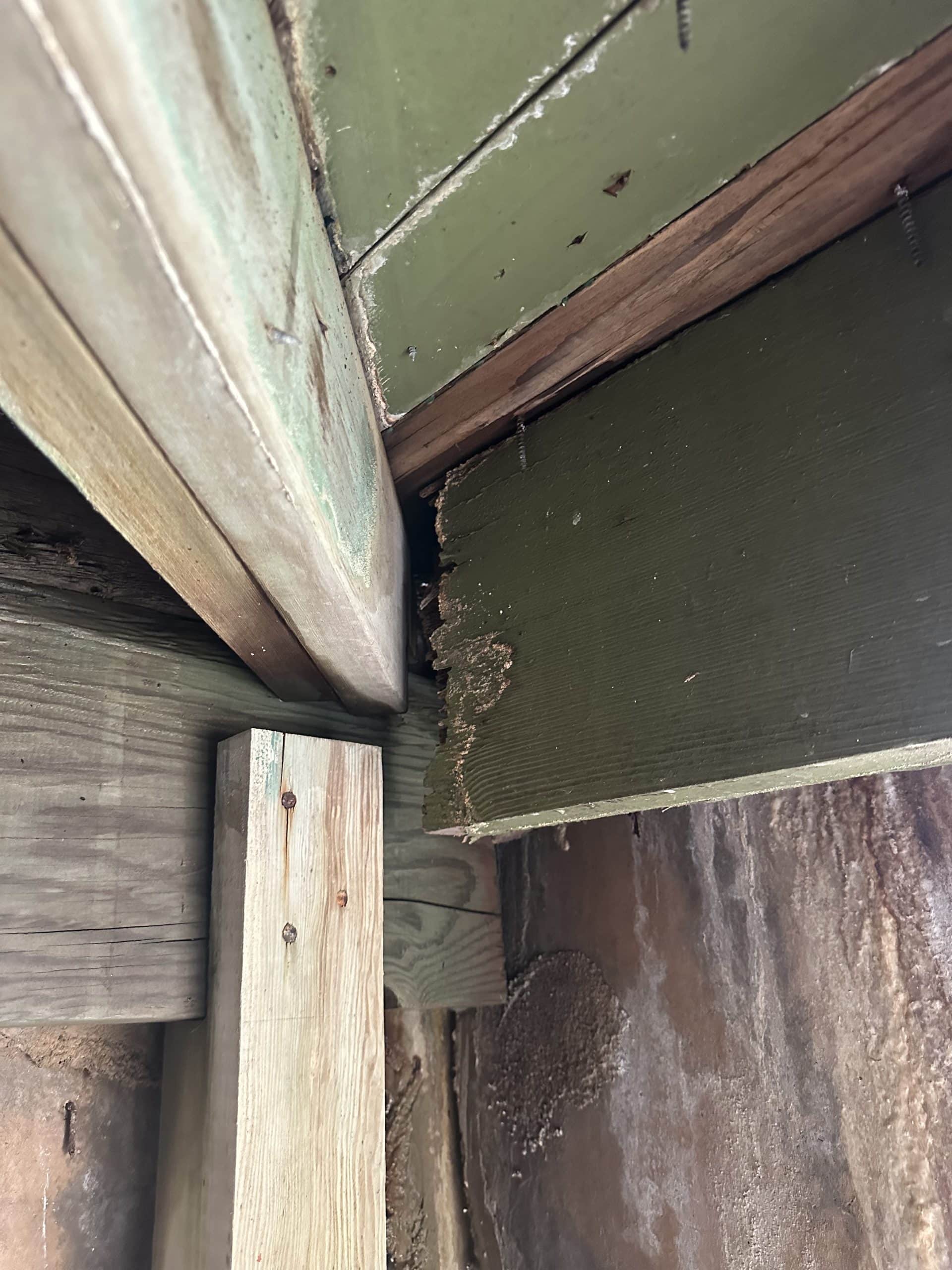
Structural framing not attached under the substructure of a deck by another contractor who tried to repair this deck in the past.
Common Deck Problems We See on Oahu
These are some of the issues homeowners are often surprised to learn about:
- improper railing installation
- notched wood posts that weaken the railing system
- wood components that deteriorate too quickly
- rusting fasteners and connectors
- failed tiled decks from waterproofing issues
- hidden rot under deck boards or behind finishes
- termite damage in framing
- damage that is only discovered after demolition begins
In Hawaii, the materials and installation methods matter a lot. A deck built with the wrong products for the environment may not last the way a homeowner expects.
Hidden Damage Is Common
One of the most important things for homeowners to understand is that visible damage is often only part of the story.
You might notice:
- a loose railing
- one soft board
- cracked tile
- rusted screws
- bubbling finish
- mildew that keeps returning
But after demolition starts, more damage may be found in:
- framing
- post bases
- waterproofing layers
- connectors
- concealed wood members
- the deck-to-house connection
That is why homeowners are sometimes told to anticipate additional repairs after demo. Some problems cannot be fully confirmed until finish materials are removed.
FAQ: Deck Safety in Hawaii
How do I know if my deck is unsafe?
Common warning signs include loose railings, soft wood, rusted fasteners, sagging areas, bounce, cracks, stains, or visible water damage. Even one or two signs can point to a larger issue.
Does where I live on Oahu affect my deck?
Yes. Decks near the ocean may have more corrosion. Windward-side decks may have more rain, mildew, and trapped moisture. Sunnier areas may see more UV wear, drying, and surface movement.
Can a deck look fine on top but still be unsafe?
Yes. This is very common. Damage is often hidden below deck boards, inside framing, around connectors, or under tiled and waterproofed surfaces.
Are rusty fasteners really a big problem?
They can be. Fasteners and connectors are critical to the strength of the deck. Rust can weaken those connections over time.
What parts of a deck usually fail first?
Common failure points include railings, fasteners, connectors, flashing areas, stair connections, post bases, waterproofed surfaces, and wood that stays damp.
Should I repair my deck or replace it?
That depends on how widespread the damage is. Some decks can be repaired. Others have enough hidden deterioration that replacement becomes the safer and more practical option.
When to Ask for a Professional Deck Evaluation
Consider getting a professional evaluation if:
- the railing moves
- wood feels soft
- fasteners are rusted
- the deck sags or bounces
- tile or coatings are bubbling
- you see water stains below a deck
- the deck is older and has not been checked in years
- you live near the ocean
- you suspect termites or hidden moisture damage
A homeowner checklist is helpful, but it has limits. NADRA notes that this type of checklist is intended to assist homeowners and recommends seeking a professional evaluation.